What Do GF, GP, HGE and RGP Mean on Jewelry? A Jeweler's Guide to Gold Markings
What Do GF, GP, HGE and RGP Mean on Jewelry? A Jeweler's Guide to Gold Markings
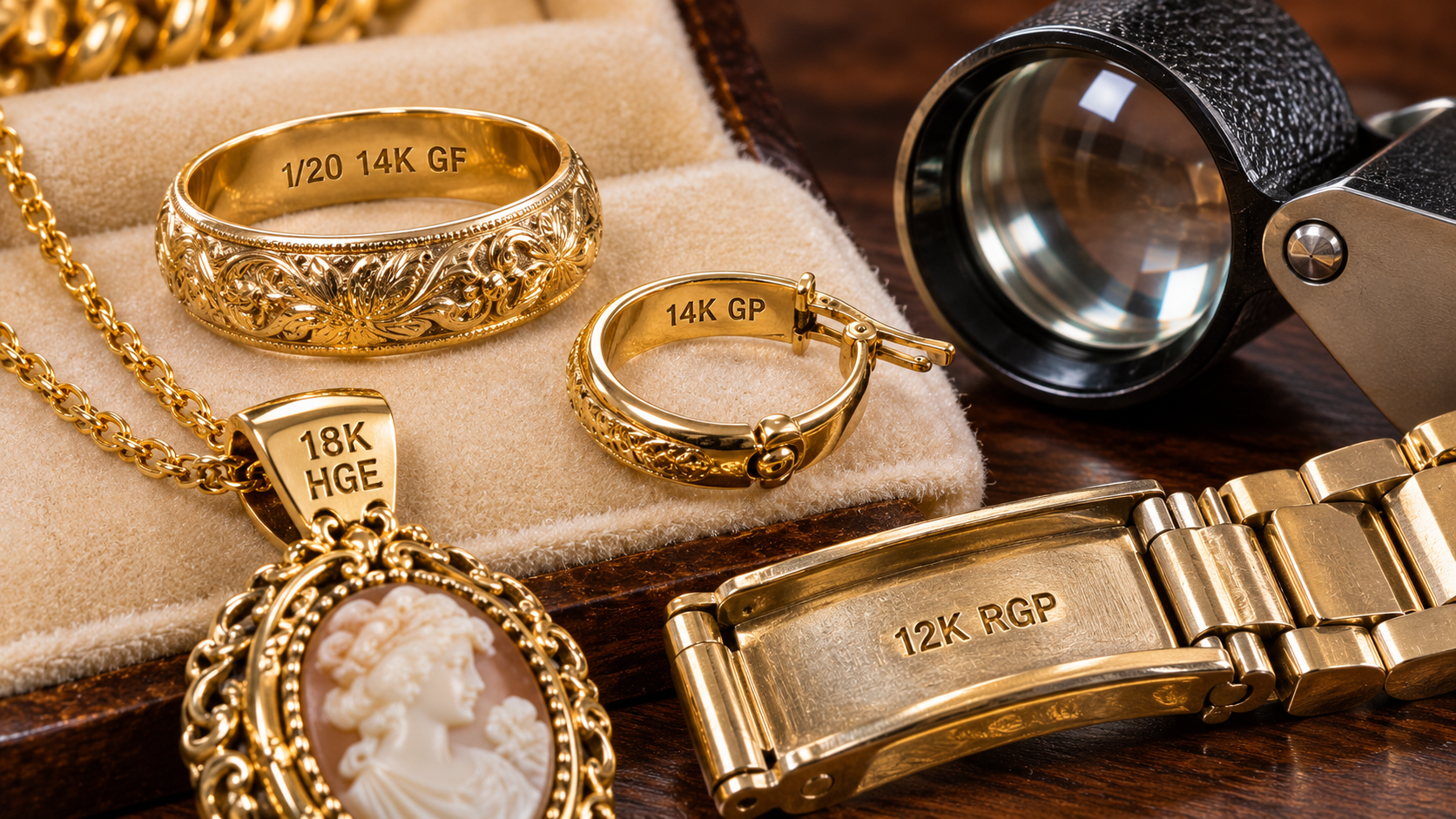
Have you ever examined an old necklace, ring, bracelet, watch, or piece of inherited jewelry and discovered tiny letters such as GF, GP, HGE, or RGP?
These markings can reveal important information about how your jewelry was manufactured and how much gold it may contain.
Many people assume that jewelry marked 14K or 18K must be solid gold. However, additional letters can completely change the meaning of the stamp.
For example, jewelry marked 14K GF is not the same as jewelry marked simply 14K.
At St. Louis Gold Buyers & Jewelry Center, we regularly help customers identify jewelry hallmarks, determine precious-metal content, and understand how those characteristics affect potential resale value.
Whether you've inherited vintage jewelry, discovered unfamiliar markings, or are wondering “is gold-filled jewelry worth money” or “what does HGE mean on a ring,” this guide explains what you need to know.
What Do GF, GP, HGE and RGP Stand For?
These letters generally describe different gold-layer construction methods.
MarkingCommon MeaningGeneral DescriptionGFGold-FilledMechanically bonded gold-alloy layer over a base metalGPGold-PlatedGold coating applied over another metalHGEHeavy Gold ElectroplateRelatively thick electroplated gold coatingRGPRolled Gold PlateMechanically bonded gold-alloy layer over a base metalGEPGold ElectroplatedGold coating deposited using an electrical process
These markings are especially common on vintage jewelry, watches, bracelets, necklaces, rings, and other accessories.
Important: Not every mark guarantees that the jewelry is authentic or accurately described. Professional identification may still be necessary.
What Does GF Mean on Jewelry?
GF stands for gold-filled.
Gold-filled jewelry contains a layer of real gold alloy mechanically bonded to a base metal.
Although the entire piece is not solid gold, the gold-alloy layer is generally more substantial than the coating found on typical gold-plated jewelry.
You may see markings such as:
- 1/20 12K GF
- 1/20 14K GF
- 12K GF
- 14K GF
What does 1/20 14K GF mean?
A traditional 1/20 14K GF marking indicates that the bonded 14K gold-alloy layer represents one-twentieth, or approximately 5%, of the total metal weight of the article.
Because 14K gold contains approximately 58.3% pure gold, the theoretical fine-gold content of that layer is about 2.9% of the total metal weight.
This is not the same as a solid 14K gold item, which contains approximately 58.3% gold throughout its qualifying metal alloy.
Actual recoverable gold content can vary with construction, wear, repairs, and other factors.
Is Gold-Filled Jewelry Real Gold?
Gold-filled jewelry contains real gold in its bonded outer layer, but the entire item is not made of gold alloy.
The underlying material is usually a base metal.
This distinction matters when selling jewelry because the weight of the entire item cannot be treated as solid-karat gold.
However, gold-filled material can still be worth evaluating.
At St. Louis Gold Buyers & Jewelry Center, we purchase select gold-filled items, particularly when customers have older pieces, larger quantities, or estate collections.
Learn more about our dedicated Gold-Filled Jewelry Buying Services.
What Does GP Mean on Jewelry?
GP commonly means gold-plated.
Gold-plated jewelry has a surface coating of gold applied over another metal.
For example, a ring stamped 14K GP generally indicates that a 14K gold alloy was used for the coating—not that the entire ring is solid 14K gold.
The underlying metal might be brass, copper, or another material.
The amount of gold in a typical plated item is often very small compared with the amount in solid-karat jewelry.
Because of this, the precious-metal resale value of ordinary gold-plated jewelry is generally much lower than that of solid gold.
However, some plated jewelry may have additional resale value because of its designer brand, craftsmanship, age, or collectibility.
What Does HGE Mean on a Ring?
HGE stands for heavy gold electroplate.
This means gold has been deposited onto a base metal using an electroplating process.
Under the U.S. Federal Trade Commission's jewelry guidance, heavy gold electroplate refers to a gold or gold-alloy coating meeting a specified minimum thickness, generally at least 2.5 microns of fine-gold equivalent.
You may encounter markings such as:
- 14K HGE
- 18K HGE
- HGE
An 18K HGE stamp does not mean the entire item is 18K gold.
Instead, the 18K designation generally refers to the gold alloy used for the plated layer.
The amount of actual gold is usually much smaller than in solid 18K jewelry.
This is one reason a professional buyer should evaluate the entire item's construction rather than relying solely on its appearance.
What Does RGP Mean on Jewelry?
RGP stands for rolled gold plate.
Rolled gold plate refers to jewelry with a layer of gold alloy mechanically bonded to another metal.
It is related to gold-filled construction, but the terms do not always describe the same gold-layer proportion.
You may see markings such as:
- 12K RGP
- 14K RGP
- 1/40 12K RGP
The karat number generally describes the purity of the gold alloy used in the outer layer.
A fractional marking may indicate the proportion of the item's metal weight represented by that layer.
For example, 1/40 12K RGP indicates a claimed 12K gold-alloy layer representing approximately one-fortieth of the metal article's weight.
Rolled gold plate is frequently encountered in vintage jewelry and accessories.
Although it contains real gold in its bonded layer when authentic, it should not be confused with solid-karat gold.
Gold-Filled vs. Gold-Plated: What's the Difference?
The main distinction is the amount of gold used and how the gold layer is applied.
Gold-Filled Jewelry
- Contains a mechanically bonded gold-alloy layer
- Generally has more gold than typical electroplated jewelry
- Often found in vintage chains, bracelets, watches, and accessories
- May have recoverable gold value, especially in larger quantities
Gold-Plated Jewelry
- Has a gold coating over another metal
- Often contains only a small amount of gold
- Is commonly used for fashion jewelry and accessories
- Usually has limited precious-metal recovery value
Neither should automatically be priced as solid-karat gold.
For more help identifying common stamps, read our published article What Do the Numbers Inside My Ring Mean?.
Is GF or RGP Jewelry Worth Money?
Potentially, yes.
The value of gold-filled or rolled-gold-plate jewelry depends on several factors:
Gold-Layer Composition
The karat purity and proportion of the bonded gold alloy matter.
Total Metal Weight
Heavier pieces may contain more gold-bearing material, depending on their construction.
Quantity
A single lightweight piece may have limited precious-metal value, while a larger collection may be more worthwhile to evaluate.
Condition
Wear and damage may affect recoverable metal content or resale appeal.
Designer or Collectible Value
Some vintage jewelry may be desirable as complete jewelry rather than solely for its recoverable metal content.
At St. Louis Gold Buyers & Jewelry Center, we consider these factors when evaluating eligible gold-filled material.
For more information about what affects resale offers, explore How Much Is My Jewelry Worth?.
Can Gold-Plated Jewelry Be Sold for Cash?
Some gold-plated items may have resale value, but ordinary plated jewelry typically contains much less recoverable gold than solid or gold-filled jewelry.
For instance, a heavy gold-plated bracelet can weigh considerably more than a small solid gold ring while still containing far less actual gold.
The appearance and total weight alone do not establish precious-metal value.
Other factors may matter, including:
- Whether the underlying metal is silver or another valuable material
- Designer or brand recognition
- Collectibility
- Overall condition
- Potential for resale as a complete item
A professional evaluation can help distinguish metal recovery value from other possible resale value.
Can Gold-Filled Jewelry Be Broken or Damaged and Still Have Value?
Yes.
Gold-filled jewelry may retain some recoverable gold content even if it is broken or no longer wearable.
Examples include:
- Broken gold-filled chains
- Damaged bracelets
- Vintage watchbands
- Old watch cases
- Single earrings
- Estate jewelry
- Scrap gold-filled lots
However, the amount of recoverable gold must be evaluated realistically.
For more information, read Can Broken Jewelry Still Be Valuable? and Sell or Repair Broken Jewelry?.
How Do Jewelers Determine Whether Jewelry Is Solid Gold or Plated?
Professional identification typically involves more than reading a stamp.
A jeweler may examine:
Hallmarks
Markings such as 10K, 14K, 18K, GF, GP, HGE, and RGP provide useful clues.
Surface Wear
Areas showing a different underlying metal may suggest plating or bonded construction.
Weight and Construction
A piece's design, density, and construction can help identify materials.
Precious-Metal Testing
Appropriate testing methods may help determine composition.
Additional Examination
Some plated materials can produce misleading surface-only test results, so the testing method must be suitable for the item.
No single visual clue or stamp should automatically be treated as definitive proof of gold content.
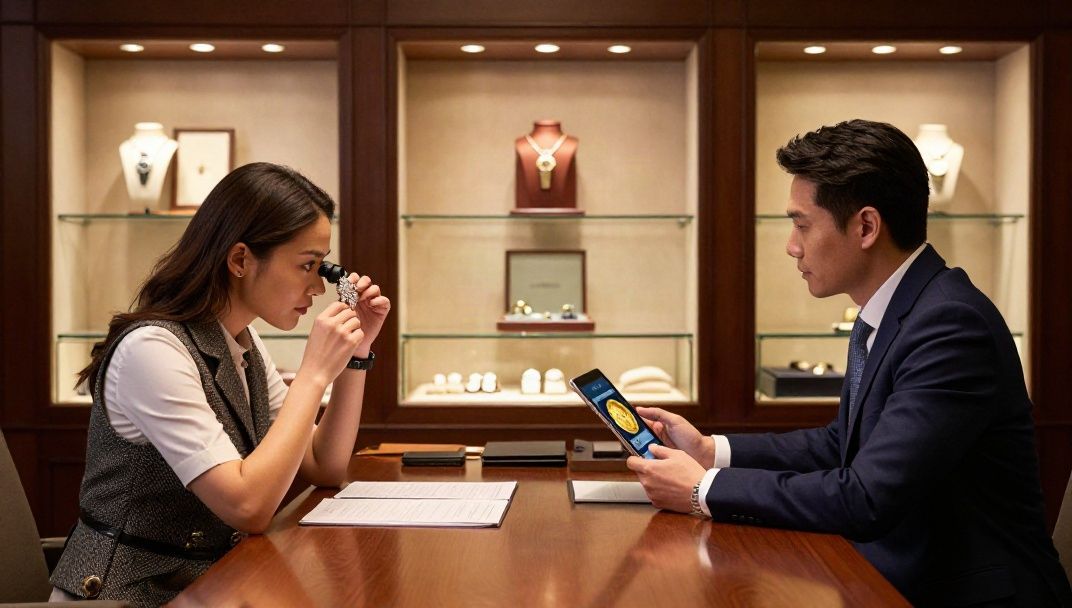
At St. Louis Gold Buyers & Jewelry Center, we perform appropriate precious-metal testing and weighing in front of customers and explain the factors affecting purchase offers.
Where Can I Sell Gold-Filled Jewelry in St. Louis?
If you're searching for “who buys gold-filled jewelry near me,” “sell GF jewelry St. Louis,” “what does GP mean on jewelry,” or “gold-filled scrap buyers,” St. Louis Gold Buyers & Jewelry Center offers free evaluations for eligible items.
Our family-owned store purchases select gold-filled material as well as solid gold jewelry, silver, platinum, diamonds, coins, and other precious-metal valuables.
We also provide Gold-Buying Services for eligible solid-karat gold jewelry and scrap gold.
Our convenient St. Ann storefront offers customer parking directly in front of the store, ground-level access, and standard weekday walk-in evaluations without an appointment.
Frequently Asked Questions About GF, GP, HGE and RGP
Does GF mean real gold?
GF indicates gold-filled construction, which contains a bonded gold-alloy layer over another metal. It is not solid gold throughout.
Is 14K GF the same as 14K gold?
No. A 14K GF item contains a bonded layer of 14K gold alloy, while a solid 14K item has approximately 58.3% gold throughout the qualifying metal alloy.
Does GP mean fake gold?
GP generally means gold-plated. The item may have a real gold coating, but it is not solid-karat gold.
Is 18K HGE real gold?
An authentic 18K HGE item has a gold-alloy electroplated layer over another metal. The entire piece is not solid 18K gold.
Is RGP worth anything?
It may be, depending on the gold-layer composition, total weight, quantity, condition, and collectible appeal.
Is gold-filled jewelry worth selling?
Some gold-filled items have recoverable gold value, particularly in larger quantities. Individual items should be evaluated rather than assuming they have the same value as solid gold.
Can you buy broken gold-filled chains?
We evaluate select broken gold-filled jewelry and other eligible gold-filled material.
Can an unmarked piece still be real gold?
Yes. Stamps can be missing, worn, altered, or difficult to interpret. Professional testing can help determine metal content.
Conclusion: Understand Jewelry Markings Before You Sell
Small letters stamped inside jewelry can make a major difference in how an item should be evaluated.
GF, GP, HGE, and RGP are not interchangeable with solid-karat gold markings.
Some identify mechanically bonded gold layers, while others describe electroplated coatings.
Although these items generally contain less gold than comparable solid-karat jewelry, certain gold-filled and vintage pieces may still have value.
Before selling or discarding jewelry with unfamiliar markings, consider having it professionally evaluated.
At St. Louis Gold Buyers & Jewelry Center, we help customers throughout the St. Louis area identify jewelry markings, understand precious-metal content, and receive transparent purchase offers.
Bring your old jewelry, gold-filled pieces, broken chains, or inherited collections to our St. Ann storefront for a free evaluation.
St. Louis Gold Buyers & Jewelry Center
9814 St. Charles Rock Road
St. Ann, MO 63074
Phone: (314) 427-4653
Contact Our Team | Get Directions
No Appointment Necessary for Standard Weekday Evaluations. No Pressure to Sell.