How We Determine the Value of Your Jewelry
How We Determine the Value of Your Jewelry at
St. Louis Gold Buyers & Jewelry Center
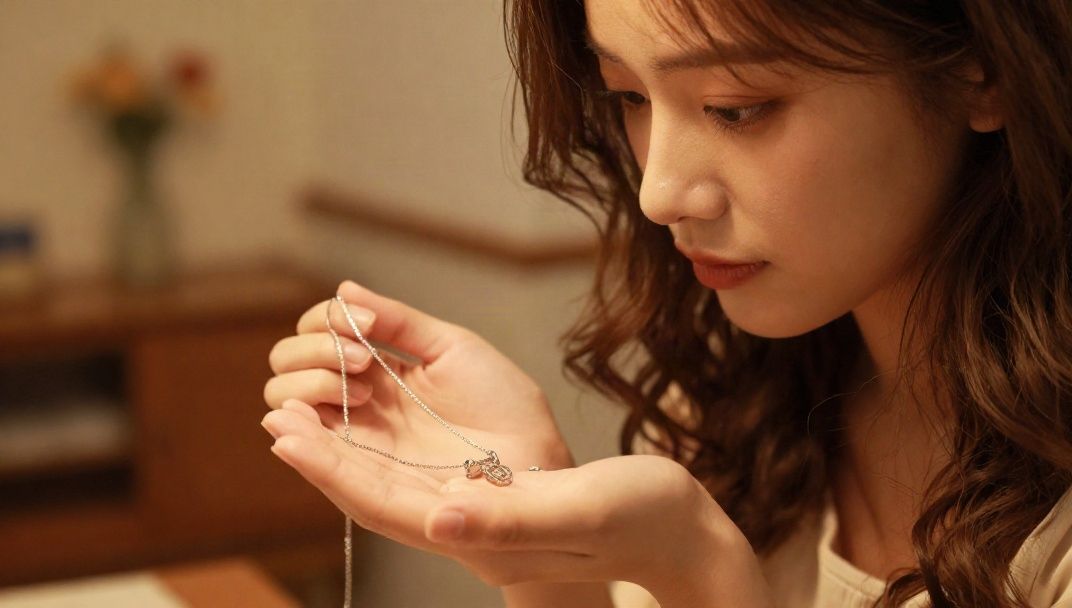
One of the first questions customers ask when they walk into St. Louis Gold Buyers & Jewelry Center is simple:“How much is my jewelry worth?”
The answer depends on much more than how old the jewelry is or how much you originally paid for it. Gold purity, weight, diamonds, gemstones, designer names, condition, current precious-metal prices, and resale demand can all influence value. If you're considering whether to sell jewelry in St. Louis, understanding how a professional jewelry buyer evaluates your items can help you make a more informed decision.
At St. Louis Gold Buyers & Jewelry Center, we believe the evaluation process should be transparent. We examine your items, test and weigh applicable precious metals, consider current market pricing, and explain the factors that contribute to your offer.
Here's what happens when you bring jewelry to us.
Step 1: We Examine the Entire Piece
A proper jewelry evaluation should begin with the complete item—not just the gold stamp.
We look at characteristics such as:
- Type of jewelry
- Precious metal
- Hallmarks and stamps
- Diamonds
- Gemstones
- Designer or maker's marks
- Construction
- Condition
- Age and style
- Potential resale demand
This is important because two pieces containing the same amount of gold may not necessarily have the same overall value.
A plain broken gold chain, for example, may primarily be valued for its precious-metal content. A desirable designer bracelet containing the same amount of gold could potentially have additional resale value as a complete piece.
Step 2: We Identify the Precious Metal
Next, we determine what type of precious metal the jewelry contains.
Common metals we evaluate include:
- Gold
- Silver
- Platinum
- Palladium
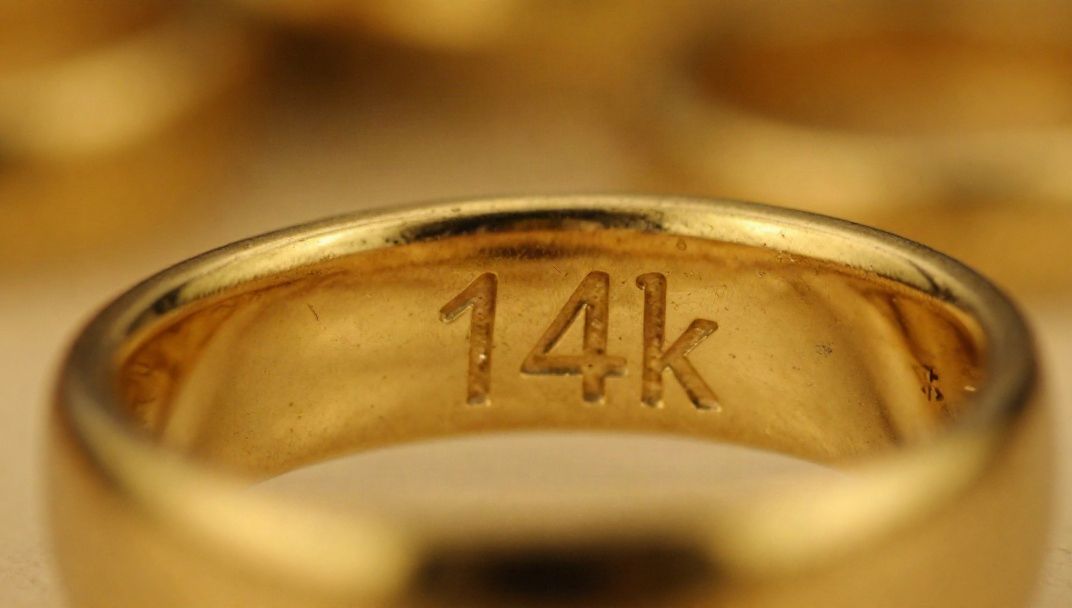
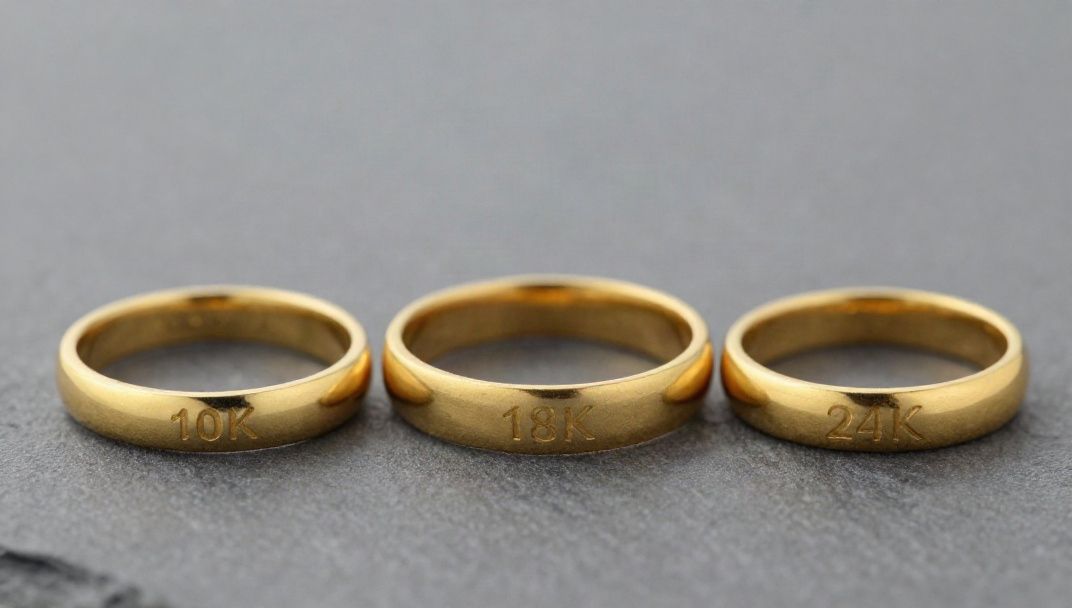
Gold jewelry may be marked:
10K, 14K, 18K, 22K or 24K
You may also encounter fineness markings such as:
417, 585, 750, 916 or 999
These markings provide useful information, but we don't assume a stamp tells the entire story.
Jewelry can be repaired, altered, incorrectly marked, plated, gold-filled, or constructed using multiple materials.
That is why testing can be an important part of determining what you actually have.
Step 3: We Determine Gold Purity
Gold purity has a direct impact on precious-metal value.
For example:
10K gold contains approximately 41.7% gold.
14K gold contains approximately 58.3% gold.
18K gold contains 75% gold.
22K gold contains approximately 91.7% gold.
24K gold is essentially pure gold.
If two pieces weigh the same but one is 10K and the other is 18K, the 18K piece contains considerably more pure gold.
That's why simply weighing jewelry isn't enough. Purity and weight must be considered together.
Step 4: We Weigh Your Jewelry
Once the metal has been identified, weight becomes another major component of the evaluation.
Precious metals can be measured using units such as:
Using grams instead of pennyweights does not inherently change the amount of gold you own. They are simply different units used to describe weight.
What matters is that the jewelry is weighed accurately and the calculation is performed correctly.
At St. Louis Gold Buyers & Jewelry Center, transparency is important to us. We want customers to understand what their jewelry weighs and how that information relates to the evaluation.
Step 5: We Consider the Current Precious-Metal Market
Gold does not have a permanently fixed price.
Gold, silver, platinum, and palladium are traded in global markets, and their prices fluctuate.
The commonly quoted market price of gold is often referred to as the spot price.
When evaluating precious-metal jewelry, current market pricing provides an important reference point.
However, a common misunderstanding is assuming that 14K jewelry should be worth the full quoted spot price of pure gold.
It isn't pure gold.
A 14K piece contains only a portion of its weight as gold, while the remainder consists of alloy metals.
Therefore, determining precious-metal value requires considering:
Weight + Purity + Current Market Price
This is why professional testing and accurate weighing are so important.
Step 6: We Examine the Diamonds
If your jewelry contains diamonds, the evaluation shouldn't automatically stop at the gold.
Diamonds can add value depending on their characteristics and current market demand.
Professional diamond evaluation commonly considers the Four Cs:
Carat
The weight of the diamond.
Cut
How the diamond has been proportioned and fashioned, which influences its appearance and light performance.
Color
The amount of body color present in the diamond.
Clarity
The presence and visibility of internal inclusions and external blemishes.
We may also consider:
- Diamond shape
- Measurements
- Certification
- Fluorescence
- Condition
- Natural versus laboratory-grown origin
- Current resale demand
A one-carat diamond is not automatically worth the same amount as every other one-carat diamond.
Quality matters.
Step 7: We Evaluate Gemstones
Some jewelry contains valuable colored gemstones.
These may include:
- Rubies
- Sapphires
- Emeralds
- Tanzanite
- Aquamarine
- Opal
- Other gemstones
Gemstone value can depend on factors such as size, color, clarity, treatment, origin, condition, rarity, and market demand.
Not every colored stone has significant secondary-market value, but valuable gemstones should not automatically be ignored when evaluating an entire piece.
Step 8: We Look for Designer and Brand Value
This is an important step that separates a complete jewelry evaluation from simply calculating scrap metal.
Some jewelry may be worth more intact because of its maker, designer, craftsmanship, or market demand.
Recognized luxury names can sometimes command premiums in the secondary market.
Original packaging, receipts, certificates, service records, and other documentation can also help establish what an item is.
If you have paperwork, bring it with you.
Step 9: We Consider Whether the Jewelry Has Resale Value
Not every piece should be valued strictly as scrap.
Some jewelry may have a viable secondary market because of its:
- Style
- Brand
- Age
- Condition
- Craftsmanship
- Diamond quality
- Gemstones
- Collectibility
- Current demand
Estate and vintage jewelry can be particularly interesting because some pieces have characteristics that aren't common in modern mass-produced jewelry.
On the other hand, an outdated or damaged piece may derive most of its value from its gold, platinum, diamonds, or other recoverable materials.
Our job is to examine the entire item before determining the appropriate approach.
Step 10: We Explain the Offer
This is one of the most important parts of our process.
You shouldn't have to wonder where the number came from.
At St. Louis Gold Buyers & Jewelry Center, we believe customers deserve to understand the basic factors influencing their offer.
Depending on the item, those factors can include:
- Precious-metal type
- Purity
- Weight
- Current market pricing
- Diamond characteristics
- Gemstone value
- Designer value
- Condition
- Resale demand
Our goal is to provide a professional, straightforward, no-pressure experience.
Does the Original Retail Price Determine What My Jewelry Is Worth?
Usually, no.
The price originally paid for jewelry and its current cash resale value are two different things.
Retail jewelry pricing can include:
- Manufacturing
- Labor
- Store overhead
- Marketing
- Sales commissions
- Distribution
- Designer premiums
- Retail profit margins
Those costs don't necessarily transfer to the secondary market when the jewelry is sold.
This is also why an insurance appraisal should not automatically be interpreted as a cash offer.
An insurance appraisal may estimate what it could cost to replace an item through a retail environment. A buyer is determining what that item is worth in today's secondary market.
Those are different valuations for different purposes.
Is Broken Jewelry Still Worth Anything?
Yes—often.
A piece doesn't have to be wearable to contain valuable materials.
We evaluate items such as:
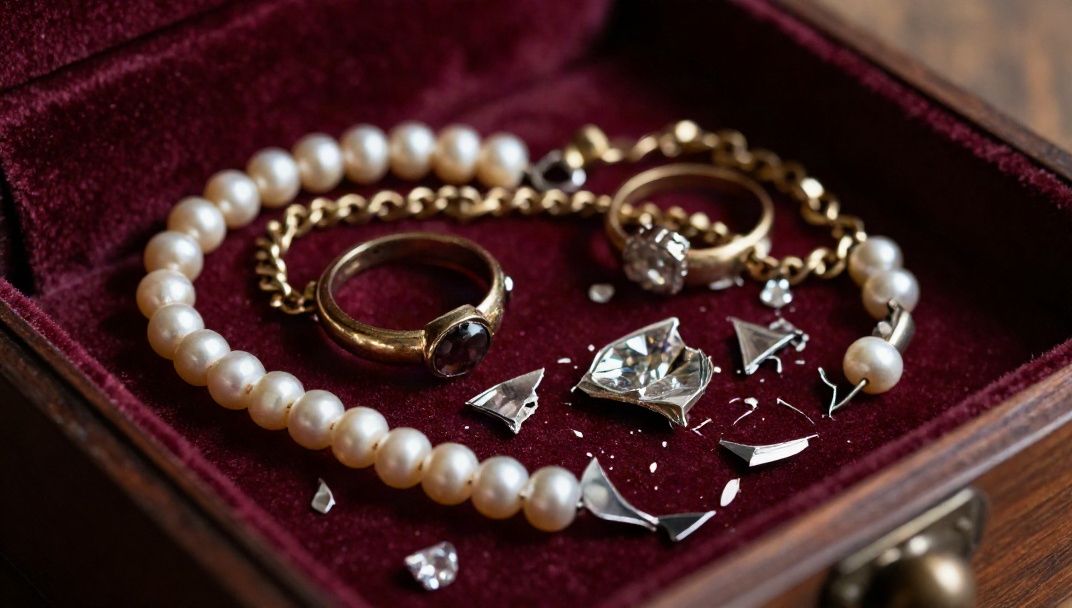
- Broken chains
- Bent rings
- Single earrings
- Damaged bracelets
- Jewelry with missing stones
- Old wedding bands
- Outdated jewelry
- Scrap gold
- Inherited jewelry
If a broken 14K chain still contains 14K gold, breaking the clasp didn't make the gold disappear.
The same principle can apply to diamonds and other valuable components.
Before throwing away damaged jewelry, have it evaluated.
What Should I Bring When Selling Jewelry?
You don't necessarily need paperwork to have jewelry evaluated, but documentation can be helpful.
If available, bring:
- Diamond grading reports
- Previous appraisals
- Original receipts
- Designer paperwork
- Original boxes
- Watch papers
- Service records
- Estate documentation
Don't worry if you don't have any of these.
Many customers bring us jewelry they inherited years ago with no paperwork whatsoever.
We can still examine the items.
How Can I Get the Best Price When Selling Jewelry?
The most important thing is understanding what you're selling.
Before accepting an offer, you should know whether your piece contains:
- Gold
- Silver
- Platinum
- Diamonds
- Valuable gemstones
- Designer characteristics
You should also understand how your items were weighed and evaluated.
This is one reason we emphasize testing, weighing, and explaining the evaluation process.
Selling jewelry should not feel like guessing.
Where Can I Sell Jewelry in St. Louis?
If you've been searching online for “sell jewelry St. Louis,” “jewelry buyers near me,” “gold buyers St. Louis,” “diamond buyers St. Louis,” or “how much is my jewelry worth?”, visit St. Louis Gold Buyers & Jewelry Center.
We evaluate and buy:
- Gold jewelry
- Broken gold
- Scrap gold
- Silver
- Sterling silver
- Platinum
- Palladium
- Diamonds
- Diamond rings
- Estate jewelry
- Gold and silver coins
- Luxury watches
- Gold-filled items
- Other valuables
Our experts are available to examine your items and explain what you're looking at.
If you decide to sell, same-day payment is available, making the process simple and convenient.
Instead of wondering what your jewelry might be worth, bring it to St. Louis Gold Buyers & Jewelry Center and let us show you how the evaluation works.
Transparent testing. Accurate weighing. Current market pricing. Clear explanations. No unnecessary pressure.
That's how we believe selling jewelry in St. Louis should work.