Do Small Diamonds Have Value When Selling Gold Jewelry? A St. Louis Jeweler Explains
Do Small Diamonds Have Value When Selling Gold Jewelry?
A St. Louis Jeweler Explains
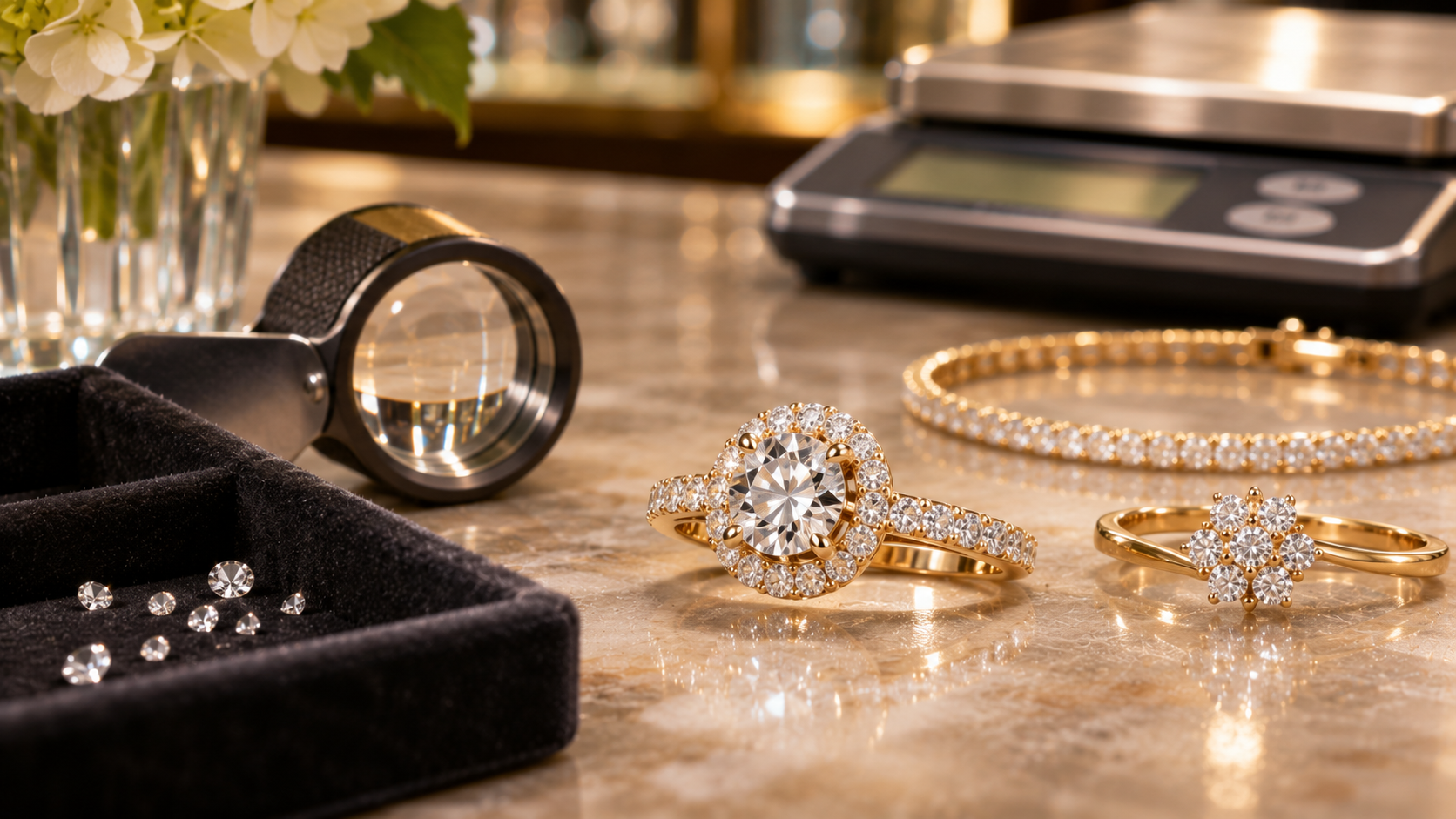
Have you ever wondered whether the tiny diamonds surrounding your engagement ring, lining your wedding band, or decorating an old gold bracelet are worth anything? Many people assume that only large diamonds have resale value. Others believe every small diamond should add a substantial amount to a jewelry buyer's offer. The truth is somewhere in between. Small diamonds can have value, but their individual size, quality, origin, condition, and resale demand determine how much they may contribute to an offer.
At St. Louis Gold Buyers & Jewelry Center, we believe customers should understand the value of their entire jewelry piece—not just its gold weight.
Whether you're selling a diamond engagement ring, wedding band, tennis bracelet, earrings, or inherited diamond jewelry, this guide explains how small diamonds are evaluated and what to know before selling.
What Are Small Diamonds or Melee Diamonds?
In the jewelry industry, many very small diamonds are referred to as melee diamonds (pronounced meh-lee).
The Gemological Institute of America (GIA) generally defines melee diamonds as stones weighing less than 0.20 carats each, although terminology can vary within the industry.
These diamonds are frequently used as accents in fine jewelry.
You may find them in:
- Diamond halo engagement rings
- Pavé diamond wedding bands
- Diamond cluster rings
- Tennis bracelets
- Diamond necklaces and pendants
- Diamond earrings
- Designer jewelry
- Diamond-set luxury watches
Despite their small size, melee diamonds play an important role in jewelry design by adding brilliance, sparkle, and visual detail.
However, their market value is generally assessed differently from that of larger individual diamonds.
Are Small Diamonds Worth Money?
Yes. Genuine small diamonds can have resale value.
However, a single tiny diamond generally has much less standalone resale value than a larger diamond of comparable quality.
This happens for several reasons.
Smaller Stones Are More Readily Available
Many small diamonds are produced, sorted, and sold in large quantities to jewelry manufacturers.
Individual Evaluation Can Be Expensive
Examining, measuring, identifying, sorting, and marketing very small stones requires time and labor.
Resale Demand Varies
A matched group of attractive natural diamonds may have more commercial appeal than a handful of unrelated loose stones.
Not Every Small Diamond Is High Quality
Color, clarity, cutting, condition, and origin all affect value.
Consequently, a ring containing dozens of tiny diamonds may not have the same diamond resale value as a ring containing one large center diamond with an equivalent total carat weight.
That does not mean the small diamonds should automatically be ignored.
The complete jewelry piece should be evaluated to determine whether the stones contribute meaningful market value.
What Determines the Value of Small Diamonds?
Jewelers consider several characteristics when evaluating diamond jewelry.
1. Carat Weight
Larger individual diamonds generally command higher prices per carat than much smaller stones of comparable quality.
2. Cut Quality
A well-cut diamond reflects light attractively and may be more marketable than a poorly proportioned stone.
3. Color
Colorless and near-colorless diamonds are often desirable, although market preferences vary.
4. Clarity
Internal inclusions and surface blemishes can influence diamond quality.
5. Natural or Laboratory-Grown Origin
Natural diamonds and laboratory-grown diamonds have different supply conditions and resale markets.
6. Condition
Chipped, cracked, or abraded diamonds may be less desirable.
7. Matching and Quantity
A matched group of diamonds of consistent size, color, and quality may have greater commercial appeal than mixed stones.
For small diamonds, precise grades are often not available unless specialized testing and examination have been performed.
Do Small Diamonds Add Value to a Gold Ring?
They can.
For example, consider two 14K gold rings of comparable gold weight.
One is a plain gold band.
The other contains a desirable arrangement of small natural diamonds.
Depending on the diamonds' characteristics, the design, and resale demand, the diamond ring may justify an offer above the value of its gold content alone.
However, this is not guaranteed.
A buyer may determine that the small stones have limited recoverable resale value or that the complete ring has stronger potential as finished jewelry.
The correct evaluation considers both the precious-metal content and the jewelry's potential resale value.
Our article How We Determine the Value of Your Jewelry explains why jewelry buyers examine more than gold purity and weight.
What About Diamond Cluster Rings?
Diamond cluster rings use multiple smaller diamonds arranged to create a larger visual design.
Some cluster settings resemble a single large diamond from a distance.
Although the combined carat weight may be substantial, a cluster ring is not automatically worth the same amount as a solitaire containing one diamond of equal total weight.
Individual diamond size matters.
For example, ten small diamonds weighing 0.10 carats each have a combined weight of one carat.
However, they generally do not command the same diamond market value as one natural one-carat diamond of comparable quality.
A cluster ring may still have attractive resale value because of its overall design, gold or platinum content, and diamond quality.
Do Pavé and Halo Diamonds Have Resale Value?
Pavé and halo settings are popular because they create an elegant appearance using small diamonds.
Pavé Diamonds
These are small diamonds set closely together, often along a ring's band or across a jewelry surface.
Halo Diamonds
These surround a center stone, adding sparkle and creating the appearance of a larger overall centerpiece.
When evaluating pavé or halo jewelry, a buyer may consider the combined quality of the diamonds and the resale potential of the complete piece.
In some cases, the accent diamonds contribute to the jewelry's value as a finished item rather than receiving separate purchase prices.
For a customer selling a halo engagement ring, the center diamond, accent diamonds, gold or platinum mounting, brand, and condition may all influence the offer.
Are Natural Small Diamonds Worth More Than Lab-Grown Diamonds?
Natural and laboratory-grown diamonds are both diamonds, but they have different origins and market conditions.
Natural Diamonds
Form through geological processes and may have resale value depending on their quality and demand.
Laboratory-Grown Diamonds
Are produced through controlled technological processes and have essentially the same fundamental chemical and physical properties as natural diamonds.
However, laboratory-grown diamonds generally face a different and often more price-sensitive secondary market.
For very small stones, accurately distinguishing natural from laboratory-grown diamonds may require specialized equipment.
Not every buyer can conclusively identify the origin of every mounted accent diamond through a basic visual examination.
Customers should not assume that every diamond-looking stone is natural, laboratory-grown, or even a diamond without appropriate identification.
What About Tiny Diamonds in Tennis Bracelets?
Diamond tennis bracelets can contain dozens of stones set in gold or platinum.
When evaluating a tennis bracelet, several factors matter:
- Total diamond weight
- Individual diamond sizes
- Diamond color and clarity
- Consistency of the stones
- Natural or laboratory-grown origin
- Precious-metal purity and weight
- Bracelet condition
- Quality of the setting
- Designer or manufacturer
- Current resale demand
A well-made bracelet containing attractive, matched natural diamonds may have resale potential beyond its metal content.
However, a bracelet with very small, low-quality, damaged, or laboratory-grown stones may have a different market value.
An accurate evaluation should examine the entire piece.
What If My Diamond Jewelry Is Broken or Missing Stones?
Broken jewelry can still have value.
A damaged gold ring may contain marketable diamonds.
A bracelet with a broken clasp may still have valuable precious-metal content.
Even a single unmatched diamond earring may be worth evaluating.
However, missing stones and damaged settings can affect what a buyer is willing to pay for the jewelry as a complete piece.
Before paying for repairs, consider having the item evaluated in its current condition.
Our article Can Broken Jewelry Still Be Valuable? explains why damaged jewelry should not automatically be discarded.
Should I Remove Small Diamonds Before Selling My Gold?
Generally, do not remove the diamonds yourself.
Removing mounted stones can damage the diamonds, precious-metal settings, or both.
Small diamonds can be particularly difficult to remove without appropriate tools and experience.
There may also be no financial benefit to separating them.
Depending on the jewelry, it may be more practical to evaluate and sell the complete piece.
If the diamonds have meaningful market value, ask how they are being considered in the offer.
If the gold is being purchased primarily for its precious-metal content, ask how the weights of stones and other non-gold components are handled.
A transparent explanation helps customers understand what they're actually selling.
Why Is My Diamond Ring's Appraisal Higher Than the Cash Offer?
This is a common source of confusion.
An insurance appraisal often estimates the retail replacement cost of a jewelry item.
A cash purchase offer reflects what a buyer can reasonably pay in the current resale market.
Retail pricing can include design, manufacturing, setting labor, marketing, overhead, and other expenses.
These costs are not necessarily recovered when a piece is resold.
Small diamonds that contributed to the original retail price may have relatively modest individual secondary-market values.
For more information, read our article Why Diamond Appraisals Don't Equal Cash Value.
You can also explore our jewelry appraisal services if you need a documented valuation for a particular purpose.
What If I Inherited Jewelry With Small Diamonds?
Inherited jewelry may contain a mixture of precious-metal and gemstone value.
Some pieces may be older designs featuring small diamonds in gold or platinum settings.
Others may have desirable designer names or distinctive craftsmanship.
Before selling inherited diamond jewelry:
- Keep any available receipts and appraisals.
- Avoid removing the diamonds yourself.
- Preserve original designer documentation.
- Avoid unnecessary polishing or repairs.
- Have the entire jewelry piece evaluated.
- Consider additional specialist opinions for potentially valuable estate pieces.
You may also find our article Where Should I Sell My Inherited Jewelry? helpful.
Where Can I Sell Gold Jewelry With Small Diamonds in St. Louis?
If you're searching for “who buys small diamonds near me,” “sell diamond rings in St. Louis,” “diamond jewelry buyers near me,” or “will gold buyers pay for small diamonds,” St. Louis Gold Buyers & Jewelry Center offers free purchase evaluations for eligible diamond and precious-metal jewelry.
We evaluate items such as:
- Diamond engagement rings
- Diamond wedding bands
- Diamond cluster rings
- Gold rings with accent diamonds
- Diamond tennis bracelets
- Diamond earrings
- Diamond necklaces
- Estate diamond jewelry
- Broken or damaged diamond jewelry
Our evaluation considers the relevant gold or platinum content, diamond characteristics, condition, and potential resale demand.
We perform appropriate precious-metal testing and weighing in front of customers and explain the factors affecting our offers.
Learn more about our gold-buying services.
Frequently Asked Questions About Small Diamonds
Do small diamonds have resale value?
Yes, some do. Their resale value depends on size, quality, origin, condition, quantity, and demand. Very small stones often have limited individual value.
Will a gold buyer pay extra for tiny diamonds?
Possibly. Some buyers consider commercially marketable small diamonds separately, while others evaluate them as part of the complete jewelry piece. Not every stone increases the offer.
Are small diamonds called melee diamonds?
Yes. Melee generally refers to small diamonds, commonly those weighing less than 0.20 carats each.
Are ten 0.10-carat diamonds worth the same as one 1-carat diamond?
Generally, no. Even when the combined weight is identical, individual diamond size and quality affect market value.
Do lab-grown accent diamonds have resale value?
They may have some value, but demand and offers vary. Small laboratory-grown diamonds often have limited standalone secondary-market value.
Should I remove the diamonds before selling a gold ring?
Not without professional guidance. Removing stones may cause damage and may not improve your proceeds.
Can I sell a ring that has missing diamonds?
Yes. Eligible jewelry can still have gold, platinum, or remaining gemstone value.
Do I need a diamond certificate to sell my jewelry?
Not necessarily. Some diamond jewelry can be evaluated without a certificate, although documentation may be helpful for certain items.
Conclusion: Small Diamonds May Have Value, but the Entire Jewelry Piece Matters
Small diamonds can add beauty and sometimes financial value to gold and platinum jewelry.
However, their resale value depends on more than sparkle alone.
Individual size, quality, natural or laboratory-grown origin, condition, quantity, and current demand all influence how much they may contribute to an offer.
The best approach is to have your complete jewelry piece evaluated before deciding what to sell or remove.
At St. Louis Gold Buyers & Jewelry Center, we help customers throughout St. Louis and St. Louis County understand their diamond jewelry, gold, platinum, and other valuables.
Our family-owned storefront offers convenient customer parking, direct ground-level access, and free, no-obligation purchase evaluations.
Have a gold ring, bracelet, necklace, or pair of earrings with small diamonds? Bring it in and find out what it may be worth.
St. Louis Gold Buyers & Jewelry Center
9814 St. Charles Rock Road
St. Ann, MO 63074
Phone: (314) 427-4653
Monday–Friday: 9 AM–5 PM
Saturday: By appointment
Sunday: Closed
Free Evaluations. Transparent Offers. Competitive Payouts. No Pressure to Sell.