Pennyweights (dwt) vs. Grams (g), What's the difference?
DWTs, Grams, & Troy Ozs - Jewelry
Why Do Jewelers Use Pennyweight (DWT) Instead of Grams?
If you have ever visited a jeweler, gold buyer, coin dealer, or precious-metals business, you may have noticed a scale displaying a measurement called DWT instead of grams. For someone unfamiliar with the jewelry industry, this can raise an obvious question: Why do jewelers use pennyweight instead of grams?
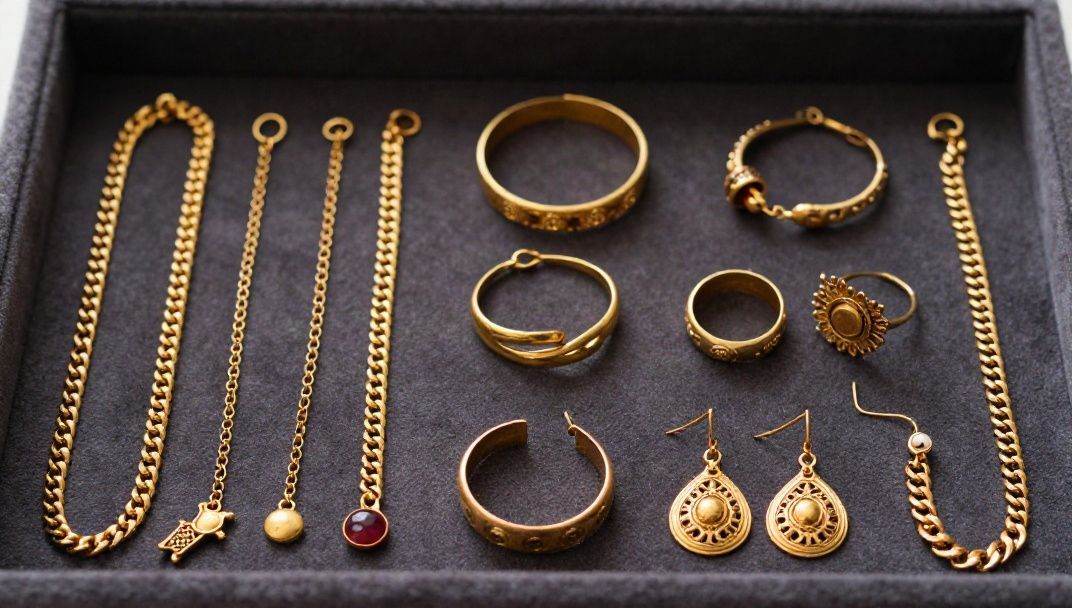
Pennyweight—commonly abbreviated as DWT—is a traditional unit of weight that has been used by jewelers, goldsmiths, refiners, and precious-metal dealers for generations. While grams are widely recognized today, pennyweight remains closely connected to the troy-weight system used for gold, silver, platinum, and other precious metals.
At St. Louis Gold Buyers & Jewelry Center, we believe customers should understand exactly how their gold and jewelry are weighed and evaluated. Whether an item is displayed in pennyweights, grams, or troy ounces, the physical amount of gold does not change. The important thing is using the correct conversion and accurately determining the item's weight and purity.
What Is a Pennyweight?
A pennyweight, abbreviated DWT, is a unit of weight traditionally used for precious metals.
The basic conversion is:
1 DWT = approximately 1.555 grams
A pennyweight is also equal to:
1 DWT = 1/20 of a troy ounce
Therefore:
20 DWT = 1 troy ounce
And one troy ounce equals approximately:
31.1035 grams
This relationship is one of the main reasons pennyweight became so common in the jewelry and precious-metals industries.
Gold and silver are internationally quoted using troy ounces, so dividing a troy ounce into 20 pennyweights provides jewelers with a convenient way to work with the relatively small quantities of precious metal commonly found in rings, chains, bracelets, earrings, and other jewelry.
Why Do Jewelers Use DWT?
There are several reasons pennyweight continues to appear in jewelry stores and gold-buying businesses.
1. Pennyweight Is Part of the Traditional Troy-Weight System
Gold, silver, platinum, and palladium have historically been measured using the troy-weight system.
Because:
20 DWT = 1 troy ounce
pennyweight provides a natural subdivision of the troy ounce.
Instead of working with fractions of an ounce when weighing small pieces of jewelry, jewelers can work with DWT.
For example:
5 DWT = approximately 7.776 grams
10 DWT = approximately 15.552 grams
20 DWT = approximately 31.103 grams
For people who work with precious metals every day, these measurements can become extremely familiar.
2. DWT Is Convenient for Smaller Jewelry Weights
Most individual pieces of jewelry weigh much less than an entire troy ounce.
A ring, bracelet, pendant, or pair of earrings may represent only a fraction of an ounce of precious metal.
Using pennyweights gives jewelers another practical way to express these smaller weights without constantly writing decimal fractions of a troy ounce.
However, it is important to understand that DWT is not automatically more accurate than grams.
Accuracy and precision depend on the quality and calibration of the scale being used. A professional jewelry scale capable of displaying small increments can accurately measure jewelry whether the display is set to grams or pennyweights.
DWT is simply another recognized unit of weight.
3. Jewelers Have Used Pennyweight for Generations
Tradition also plays a major role.
For many years, jewelry scales, refining calculations, precious-metal charts, and industry references have included pennyweight measurements.
Goldsmiths, jewelers, refiners, estate buyers, and precious-metal dealers became accustomed to working with DWT long before digital scales made switching between measurement systems effortless.
For an experienced jeweler, seeing:
10 DWT
may be just as natural as another person seeing:
15.55 grams.
Many modern digital jewelry scales can instantly switch between DWT, grams, and troy ounces, allowing the same piece of jewelry to be displayed in whichever measurement the customer prefers.
Does DWT Mean Your Gold Weighs Less?
No.
This is one of the most important things to understand when selling gold.
Changing the unit of measurement does not change the physical weight of your jewelry.
For example:
10 DWT ≈ 15.55 grams
Those numbers may look very different, but they represent approximately the same physical weight.
Think about measuring distance in miles versus kilometers.
A distance doesn't become shorter simply because a different measurement system is used.
The same concept applies to gold.
Whether your jewelry is measured in:
- Pennyweights
- Grams
- Troy ounces
the physical amount of precious metal remains the same.
How Do You Convert DWT to Grams?
The conversion is straightforward.
To convert pennyweights to grams:
DWT × 1.555 = grams
For example:
1 DWT × 1.555 = approximately 1.555 grams
5 DWT × 1.555 = approximately 7.776 grams
10 DWT × 1.555 = approximately 15.552 grams
20 DWT × 1.555 = approximately 31.103 grams
So if a gold bracelet weighs 12 DWT, it weighs approximately:
18.66 grams
How Do You Convert Grams to DWT?
To convert grams into pennyweights:
Grams ÷ 1.555 = DWT
For example:
15.55 grams ÷ 1.555 ≈ 10 DWT
Again, neither number makes the jewelry more or less valuable. They are simply different ways of expressing the same weight.
What Is the Difference Between a Troy Ounce and a Regular Ounce?
This is another important distinction when discussing gold.
Precious metals are generally measured using troy ounces, not the regular ounces commonly used for food and household products.
A troy ounce weighs approximately:
31.1035 grams
A regular or avoirdupois ounce weighs approximately:
28.3495 grams
That means a troy ounce is heavier than a standard ounce.
Because precious-metal market prices are generally quoted per troy ounce, understanding this distinction is important when calculating gold, silver, platinum, and palladium values.
One troy ounce is also exactly:
20 pennyweights
This connection between pennyweight and the troy ounce helps explain why DWT became so deeply established in the jewelry industry.
Does Using Grams Instead of DWT Change the Value of Your Gold?
No.
Whether your gold is weighed in grams or pennyweights should not change its value when the conversions are performed correctly.
For example:
Suppose a piece of gold jewelry weighs:
10 DWT
That same item weighs approximately:
15.55 grams
If the item's purity, market price, and all other factors remain the same, changing the display from DWT to grams does not change the amount of gold present.
What matters is that the buyer uses the correct weight when calculating the item's precious-metal content.
Weight Is Only Part of Determining Gold Value
Knowing the weight of your jewelry is important, but weight alone does not determine how much gold jewelry is worth.
A professional evaluation should also consider gold purity.
Common gold purities include:
10K gold — approximately 41.7% pure gold
14K gold — approximately 58.3% pure gold
18K gold — 75% pure gold
22K gold — approximately 91.7% pure gold
24K gold — approximately 99.9% pure gold
Consider two rings that both weigh 10 DWT.
If one ring is 10K and the other is 18K, they contain very different amounts of pure gold even though their total physical weights are identical.
That is why professional gold buyers consider both weight and verified purity when determining precious-metal value.
Why Professional Gold Testing Matters
A hallmark or stamp can provide useful information, but it should not always be the only factor used to identify gold.
Jewelry may be:
- Gold-plated
- Gold-filled
- Mismarked
- Heavily repaired
- Made from several different metals
- Missing its original hallmark
- Manufactured in a different country
- Made to a slightly different fineness than the stamp suggests
Professional testing helps determine what an item actually contains.
At St. Louis Gold Buyers & Jewelry Center, we believe the evaluation process should be straightforward and understandable. We evaluate your jewelry, examine its purity, weigh the item using professional equipment, and explain how those factors relate to its value.
Can I Ask to See My Gold Weight in Grams?
Absolutely.
Modern professional jewelry scales commonly allow jewelers to switch between several units of measurement.
If a scale is displaying DWT and you would rather see grams, simply ask.
At St. Louis Gold Buyers & Jewelry Center, converting between grams and pennyweights is simple for our experienced jewelry professionals.
For example, if the scale shows:
8 DWT
that equals approximately:
12.44 grams
If you prefer grams because the measurement is easier for you to understand, there is nothing wrong with using grams.
Transparency is more important than which legitimate unit of measurement appears on the display.
Why Transparency Matters When Selling Gold
Many people searching for a gold buyer in St. Louis are unfamiliar with pennyweights, karats, troy ounces, spot prices, or precious-metal calculations.
You should not need to be a jeweler to understand what is happening to your valuables. At St. Louis Gold Buyers & Jewelry Center, our goal is to make the process easier to understand. Customers can see their items being evaluated and weighed, and we explain the measurements and calculations involved in the evaluation. If you see DWT on our scale, you are welcome to ask what it means or request to see the equivalent gram weight. The measurement system should never be used to confuse someone selling gold.
Does Pennyweight Apply to Diamonds and Gemstones?
Pennyweight is primarily associated with precious metals such as gold and silver.
Diamonds and many gemstones are generally measured using carats, abbreviated ct.
One metric carat equals:
0.2 grams
It is important not to confuse carat, which measures gemstone weight, with karat, which describes gold purity.
For example:
A 1.00-carat diamond refers to the diamond's weight.
A 14-karat gold ring refers to the purity of the gold.
These are completely different measurements despite sounding similar.
Is Pennyweight Still Used Today?
Yes.
Although grams have become increasingly common, pennyweight remains widely recognized throughout portions of the jewelry, refining, estate-buying, and precious-metals industries.
Some professionals prefer grams.
Others prefer pennyweights.
Many use both.
Digital scales have made the distinction much less important because measurements can often be converted instantly.
Ultimately, what matters is not whether someone uses grams or DWT.
What matters is:
- Accurate weighing
- Correct conversion
- Proper gold testing
- Verified purity
- Current precious-metal market pricing
- Clear explanation of the calculation
Where Can I Have My Gold Weighed in St. Louis?
If you are searching for “gold buyers near me,” “sell gold St. Louis,” “jewelry buyers St. Louis,” or “where can I sell gold jewelry in St. Louis?”, you do not need to calculate pennyweights or grams before bringing your jewelry in.
Bring your items to St. Louis Gold Buyers & Jewelry Center and let our experienced team evaluate them.
We buy many types of valuables, including:
- Gold jewelry
- Broken gold
- Scrap gold
- Silver
- Sterling silver
- Platinum
- Palladium
- Diamonds
- Gold and silver coins
- Luxury watches
- Estate jewelry
- Rings
- Chains
- Bracelets
- Earrings
- Pendants
Our Saint Ann showroom provides professional evaluations in a straightforward, no-pressure environment. Whether your jewelry is measured in
DWT, grams, or troy ounces, the goal should always be the same: determine the correct weight, verify the precious-metal content, and clearly explain how the value is being calculated. At
St. Louis Gold Buyers & Jewelry Center, we believe customers deserve to understand what they have before deciding whether to sell.