Where Can I Sell Old Coins in St. Louis? A Guide to Finding the Right Coin Buyer
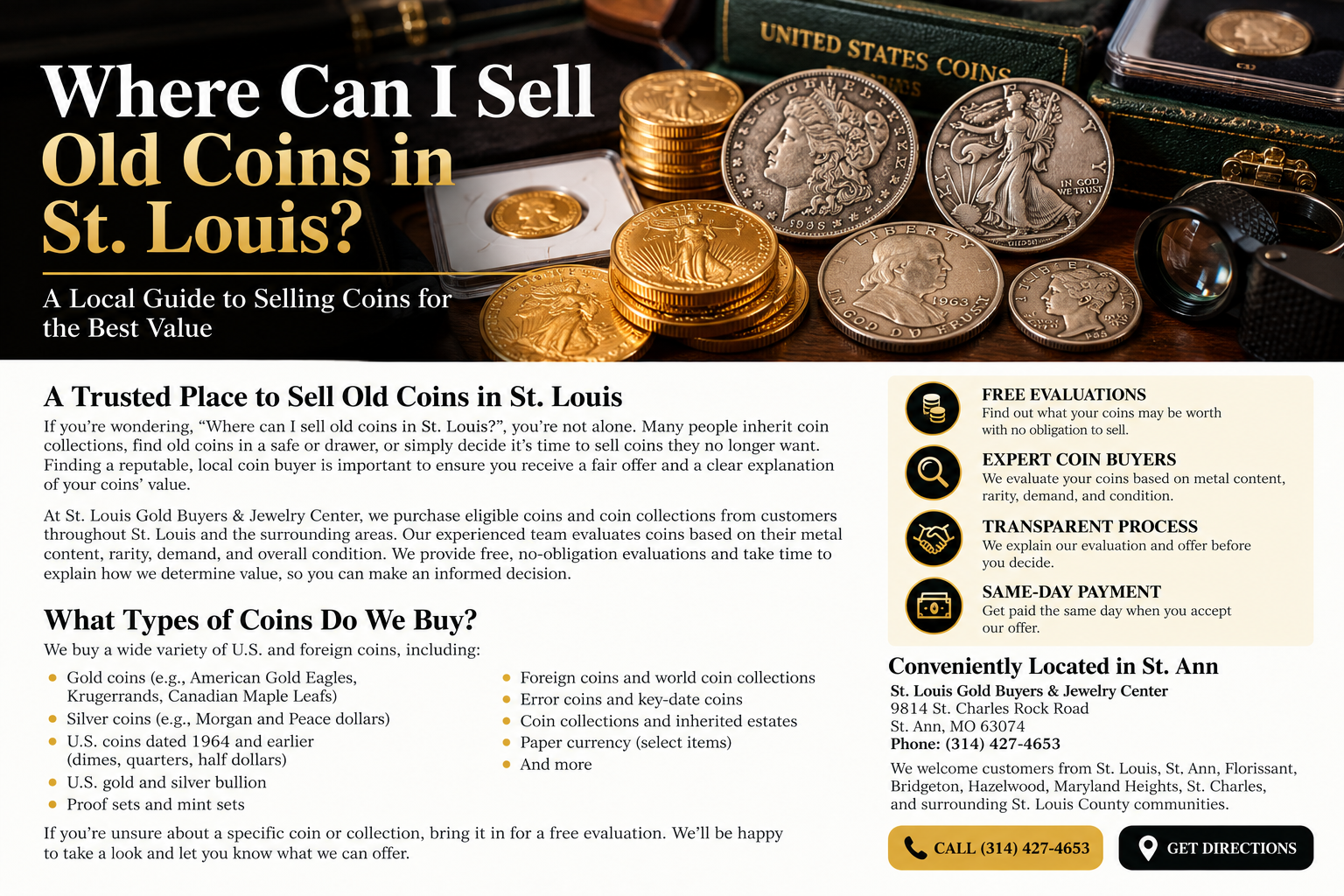
Have you discovered old coins in a drawer, inherited a coin collection, or wondered whether your silver dollars, gold coins, or vintage U.S. coins are worth money?
Many people search for “where can I sell old coins in St. Louis,” “coin buyers near me,” “who buys old silver dollars,” or “best place to sell coins for cash.”
The answer depends on what types of coins you own and whether their value comes from precious-metal content, collectible demand, or both.
At St. Louis Gold Buyers & Jewelry Center, we help customers throughout St. Louis and surrounding communities understand the value of eligible gold coins, silver coins, bullion, and coin collections.
Our family-owned store provides free, no-obligation evaluations, transparent explanations, competitive purchase offers, and same-day payment when an eligible offer is accepted.
Before selling your coins, here's what you should know.
Where Is the Best Place to Sell Old Coins in St. Louis?
Several types of businesses purchase old coins, including precious-metal buyers, coin dealers, rare-coin specialists, and some pawn shops.
However, not every buyer specializes in the same types of coins.
Precious-Metal Buyers
Precious-metal buyers commonly purchase gold coins, silver coins, bullion, and coins valued primarily for their metal content.
Coin Dealers
Coin dealers may purchase collectible coins, bullion, and entire collections, depending on their specialties.
Rare-Coin Specialists
Specialists focus on coins with unusual dates, mint marks, conditions, or other characteristics that may create significant collector premiums.
Pawn Shops
Some pawn shops purchase coins, although their experience and pricing practices vary.
The best buyer is one who understands the type of coins you own, explains their value, and provides a purchase offer you can evaluate confidently.
For common gold and silver coins, a reputable local precious-metal buyer can be a convenient place to begin.
What Types of Old Coins Are Worth Money?
Many coins are worth more than their original face value.
Some contain valuable gold or silver, while others have additional collectible value.
Gold Coins
Common examples include:
- American Gold Eagles
- American Gold Buffalos
- Canadian Gold Maple Leafs
- South African Krugerrands
- British Gold Sovereigns
- Older U.S. gold coins
- Other eligible foreign gold coins
Silver Coins
Common examples include:
- Morgan silver dollars
- Peace silver dollars
- American Silver Eagles
- Pre-1965 U.S. silver dimes
- Pre-1965 U.S. silver quarters
- Silver half dollars
- Canadian Silver Maple Leafs
- Other eligible foreign silver coins
Coin Collections
Collections may include a combination of circulated coins, silver dollars, gold coins, bullion, proof sets, mint sets, and professionally graded coins.
Some collections also contain rare dates or unusual varieties that deserve additional examination.
Important: A coin does not have to be extremely old to contain valuable precious metal, and an old coin is not automatically rare.
Are Old Silver Dollars Worth Money?
Many older U.S. silver dollars contain substantial amounts of silver.
Two well-known examples are Morgan silver dollars and Peace silver dollars.
Morgan Silver Dollars
Original Morgan silver dollars were produced from 1878 through 1904 and again in 1921.
Peace Silver Dollars
Original Peace silver dollars were issued from 1921 through 1928 and again in 1934 and 1935.
Both original series contain approximately 0.7734 troy ounces of pure silver per coin.
However, silver content is only part of the valuation.
Certain dates, mint marks, and conditions may make a coin worth considerably more than its silver melt value.
Before selling an unusual silver dollar, it's important to determine whether it may have additional collector value.
What About Silver Dimes, Quarters, and Half Dollars?
Many U.S. coins dated 1964 or earlier contain 90% silver.
Common examples include Roosevelt dimes, Washington quarters, Franklin half dollars, and 1964 Kennedy half dollars.
Kennedy half dollars dated 1965 through 1970 generally contain 40% silver.
These coins are often purchased in groups based on their silver content.
In the precious-metals industry, common circulated silver coins are sometimes called junk silver. Despite the name, they can contain significant silver value.
A standard estimate for average circulated U.S. 90% silver dimes, quarters, and half dollars is approximately 0.715 troy ounces of pure silver per $1 face value.
This estimate does not apply to Morgan and Peace silver dollars, which have different specifications.
For customers with jars, rolls, or inherited groups of old silver coins, identifying their dates and compositions is a useful first step.
What Makes a Coin Worth More Than Its Melt Value?
Not every coin should be sold strictly for its precious-metal content.
Some coins have what is called numismatic value, meaning collectors may pay more because of characteristics beyond the metal itself.
Important factors include:
Rarity: How difficult the coin is to find.
Date and Mint Mark: Certain years and mint locations are more desirable.
Condition: Well-preserved coins may command higher prices.
Collector Demand: Popular series and scarce varieties can attract additional interest.
Authentication: Genuine coins generally have more reliable marketability than questionable examples.
Professional Grading: Certification from recognized grading services may help establish authenticity and condition.
A common circulated silver dollar and a scarce-date silver dollar can contain the same amount of silver but have dramatically different market values.
For potentially rare coins, an evaluation from a qualified numismatic specialist may be worthwhile before accepting a metal-based offer.
Should I Clean Old Coins Before Selling Them?
Generally, no.
Cleaning old coins can damage their original surfaces and reduce collectible value.
Avoid using:
- Silver polish
- Toothpaste
- Abrasive cleaners
- Wire brushes
- Harsh chemicals
- Scrubbing pads
Natural toning, discoloration, and age do not automatically make a coin less valuable.
In fact, collectors often prefer original surfaces over coins that have been polished or aggressively cleaned.
If your coins are stored in protective holders, albums, or professional grading cases, leave them in place whenever possible.
When in doubt, have your coins examined before attempting to clean them.
Can I Sell an Inherited Coin Collection?
Yes. Many precious-metal buyers and coin dealers purchase inherited coin collections.
If you've inherited coins from a parent, grandparent, or another family member, you may not know exactly what the collection contains.
Before selling, consider these steps:
- Keep coins in their existing holders or protective packaging.
- Separate obvious gold coins, silver coins, and ordinary circulation coins.
- Look for original receipts, inventories, and grading certificates.
- Avoid cleaning or polishing anything.
- Ask whether potentially collectible coins require specialist evaluation.
You don't necessarily need to identify every coin before seeking an initial evaluation.
For larger collections, contacting the buyer in advance can help determine how much time may be needed.
At St. Louis Gold Buyers & Jewelry Center, we evaluate eligible gold and silver coins and precious-metal collections. Items with potentially significant numismatic value may warrant a separate specialist opinion.
Is It Better to Sell Coins Locally or Online?
Selling coins locally offers several practical advantages.
Face-to-Face Evaluations
You can meet the buyer, ask questions, and discuss the items directly.
No Shipping Required
You avoid packaging, shipping expenses, and the risk of coins being lost or damaged in transit.
Transparent Explanations
A local buyer can explain relevant precious-metal values and purchase factors before you decide.
Prompt Payment
Eligible transactions can often be completed during the same visit.
Online marketplaces and specialized auctions may be useful for rare or highly collectible coins, but sellers should consider fees, shipping, insurance, and payment delays.
The best choice depends on your coins and the amount you expect to receive after expenses.
Why Choose a Local Coin Buyer With a Physical Storefront?
When selling valuable coins, convenience and accessibility matter.
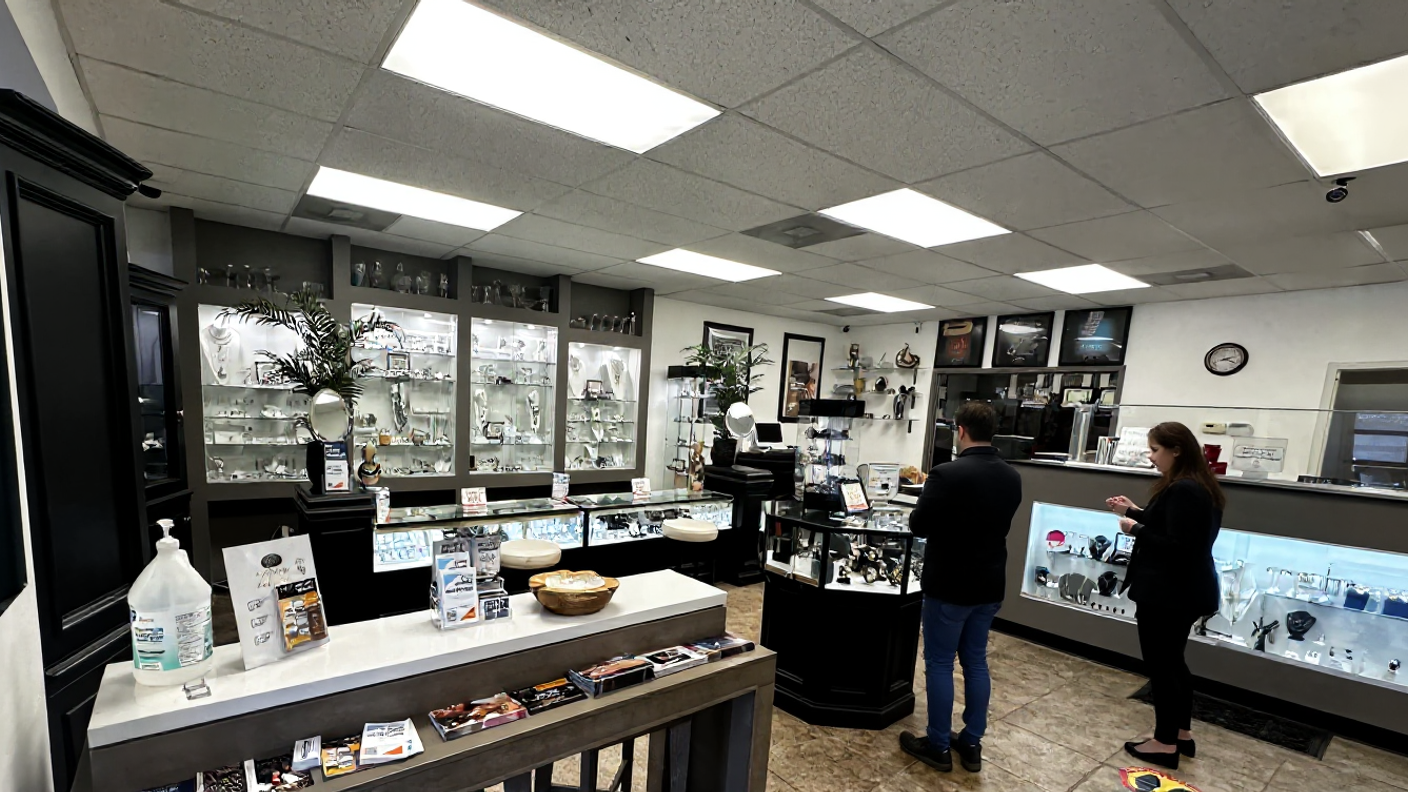
At St. Louis Gold Buyers & Jewelry Center, our ground-level storefront in St. Ann allows customers to walk directly into our jewelry store.
We offer:
- Customer parking directly in front of the store
- No elevators or multiple floors
- No appointment required for standard evaluations
- Free, no-obligation evaluations
- Appropriate testing and weighing in front of customers
- Clear explanations of purchase offers
- Same-day payment when an eligible offer is accepted
You don't need to navigate a large office building or ship your valuables to an unfamiliar company.
Simply drive to our store, park, walk through our front door, and let us take care of the rest.
Our team can examine your eligible coins and explain the factors influencing their purchase value.
How Are Gold and Silver Coin Offers Calculated?
For coins valued primarily for precious-metal content, purchase offers depend on several factors.
These include:
- Metal type
- Precious-metal purity
- Actual precious-metal weight
- Current gold or silver market prices
- Coin type
- Market premiums
- Resale demand
- Condition and authenticity
The basic precious-metal melt-value formula is:
Pure precious-metal weight × current market price = estimated melt value
However, melt value is not necessarily the amount a buyer will offer.
Actual offers may reflect market premiums, resale demand, transaction costs, and other factors.
Certain bullion coins may trade above their melt value, while potentially rare collectible coins may require a different valuation approach.
At St. Louis Gold Buyers & Jewelry Center, we believe customers should understand how their items are evaluated before deciding whether to sell.
Learn more about our precious-metal buying services.
Where Can I Sell Old Coins Near St. Ann, Florissant, and St. Louis County?
St. Louis Gold Buyers & Jewelry Center is conveniently located at:
St. Louis Gold Buyers & Jewelry Center
9814 St. Charles Rock Road
St. Ann, MO 63074
Phone: (314) 427-4653
We welcome customers from:
- St. Ann, MO
- Florissant, MO
- Hazelwood, MO
- Bridgeton, MO
- Maryland Heights, MO
- St. Charles, MO
- St. Louis County and surrounding communities
Our store is located on St. Charles Rock Road, directly across from the farmers market.
No appointment is necessary for standard coin evaluations.
Frequently Asked Questions About Selling Old Coins
Where can I sell old coins for cash in St. Louis?
Local precious-metal buyers, coin dealers, and rare-coin specialists may purchase old coins. St. Louis Gold Buyers & Jewelry Center evaluates eligible gold coins, silver coins, bullion, and precious-metal collections.
Are old coins always valuable?
No. Age alone does not determine value. Some coins are worth only face value, while others contain valuable metals or have collectible premiums.
Who buys Morgan silver dollars near me?
Many coin dealers and precious-metal buyers purchase Morgan silver dollars. Potentially rare dates or varieties may warrant a specialist evaluation.
Can I sell silver quarters and dimes?
Yes. Many older U.S. silver dimes and quarters contain 90% silver and may be purchased for their precious-metal content.
Are gold coins worth more than their gold content?
Some are. Recognized bullion coins may carry market premiums, and certain older gold coins have additional numismatic value.
Can I sell an entire inherited coin collection?
Potentially. Buyers may evaluate eligible collections, although rare coins and unusual items may benefit from specialized appraisal.
Should I remove coins from protective holders?
Generally, no. Original holders and professional grading cases may preserve condition and provide useful information.
Do I need an appointment?
No. Walk-ins are welcome for standard evaluations during regular business hours.
Are coin evaluations free?
Yes. We offer free, no-obligation evaluations for eligible precious-metal coins and related items.
How quickly can I get paid?
When an eligible purchase offer is accepted, payment is generally provided the same day.
Conclusion: Find the Right Buyer for Your Old Coins in St. Louis
If you're wondering where to sell old coins in St. Louis, start by identifying whether your coins are valuable primarily for their gold or silver content, collectible characteristics, or both.
Common gold and silver coins may be well suited for evaluation by a reputable precious-metal buyer, while rare dates and unusual varieties may require specialized numismatic expertise.
At St. Louis Gold Buyers & Jewelry Center, we make the process convenient with free evaluations, transparent explanations, customer parking, and walk-in service at our ground-level storefront.
Whether you have a few old silver dollars, gold bullion coins, or an inherited collection, we're here to help you understand your options.
No appointment necessary. Just bring your eligible coins to our St. Ann store.
St. Louis Gold Buyers & Jewelry Center
9814 St. Charles Rock Road
St. Ann, MO 63074
Call: (314) 427-4653