Why Do Gold Buyers Offer Different Prices for the Same Gold Jewelry?
Why Do Gold Buyers Offer Different Prices for the Same Gold Jewelry?
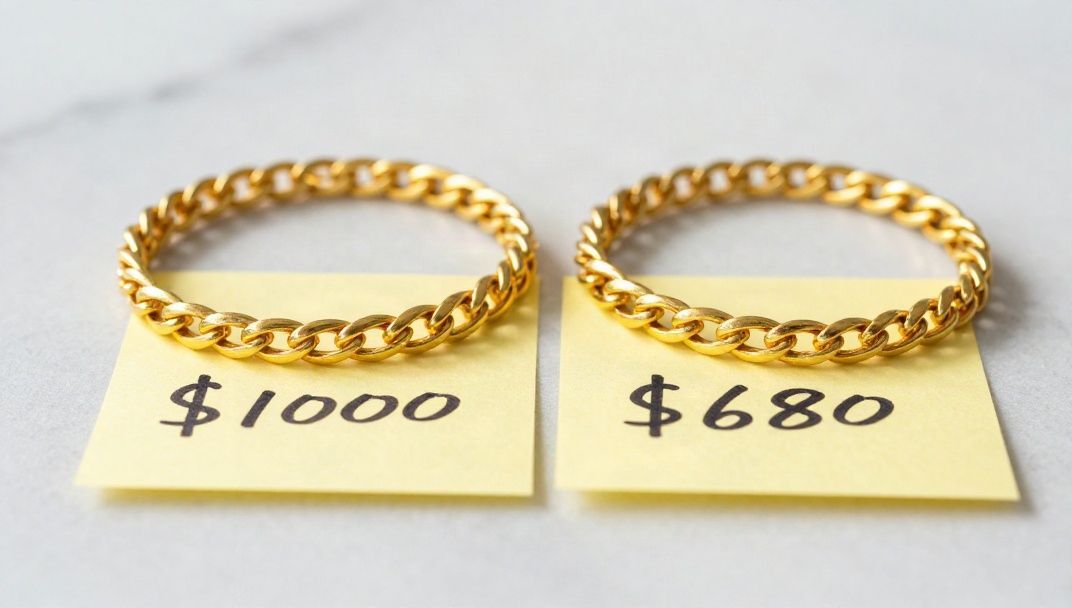
If you take the same gold necklace, bracelet, ring, or broken piece of jewelry to several gold buyers, you may receive several different offers. That naturally raises an important question: Why do gold buyers offer different prices for the exact same gold jewelry?
The answer is that a professional gold offer involves more than simply placing jewelry on a scale and looking at the current price of gold.
A buyer may consider the weight, gold purity, current precious-metal market, testing results, refining costs, diamonds or gemstones, condition, brand, design, resale potential, and current market demand.
Understanding these factors can help you make a more informed decision when choosing where to sell gold in St. Louis.
1. Gold Buyers May Test Your Jewelry Differently
One of the first steps in evaluating gold jewelry is determining its purity.
Gold jewelry is commonly manufactured in different karats, including:
- 10K gold — approximately 41.7% gold
- 14K gold — approximately 58.3% gold
- 18K gold — 75% gold
- 22K gold — approximately 91.7% gold
- 24K gold — nearly pure gold
Because the amount of pure gold differs significantly between karats, correctly identifying purity is essential.
A professional jewelry buyer may examine hallmarks and use appropriate testing methods to help verify the metal and its purity.
For example, two bracelets could weigh exactly the same but have very different precious-metal values if one is 10K and the other is 18K.
2. Weight Matters
After determining purity, the jewelry must be weighed accurately.
Gold buyers and jewelers may use grams or pennyweights (DWT).
The units are different, but they measure the same physical weight when converted correctly.
1 pennyweight equals approximately 1.555 grams.
There are 20 pennyweights in one troy ounce, and one troy ounce equals approximately 31.1035 grams.
Whether your gold is weighed in grams or pennyweights should not change its underlying value when the conversion and calculations are performed correctly.
3. Gold Prices Constantly Change
The precious-metals market changes throughout the trading day.
The spot price of gold is an important market benchmark, but the spot price does not mean every piece of jewelry is worth that amount.
For example, a 14K necklace isn't pure gold. Its theoretical fine-gold content is only part of its total weight.
A buyer must first determine:
Weight × Gold Purity = Approximate Fine-Gold Content
The current gold market can then be applied to that fine-gold content as part of the evaluation.
This is one reason offers can change when gold prices move.
4. The Percentage of Spot Isn't the Whole Story
Consumers sometimes hear statements such as:
“We pay X% of spot.”
That can sound like an easy way to compare buyers, but a percentage alone doesn't tell you everything.
You also need to know:
- What weight is being used?
- What purity is being used?
- Is the calculation based on a troy ounce?
- Were stones or non-gold components accounted for?
- Is the buyer considering the jewelry as a complete piece?
- Is the percentage being applied to the actual fine-gold content?
A transparent evaluation should make it possible for you to understand how the offer was determined.
5. Some Buyers See Scrap Gold—Others May See Jewelry
This can create one of the largest differences between offers.
Suppose you bring in a 14K gold bracelet.
One buyer might evaluate it primarily for its recoverable gold content.
Another buyer may recognize that the bracelet has additional resale potential because of its:
- Designer or maker
- Style
- Condition
- Craftsmanship
- Diamonds or gemstones
- Age or collectability
- Current customer demand
If an item has value as a complete piece of jewelry, evaluating it strictly as scrap metal may overlook part of its potential value.
At St. Louis Gold Buyers & Jewelry Center, we believe the entire piece should be examined before determining the appropriate way to evaluate it.
6. Diamonds and Gemstones Can Affect the Offer
A gold ring may contain much more than gold.
Diamond rings, gemstone jewelry and estate pieces may contain stones that deserve separate consideration.
Factors can include:
- Diamond carat weight
- Cut
- Color
- Clarity
- Natural or laboratory-grown origin
- Gemstone type
- Condition
- Market demand
Not every stone has significant secondary-market value, but automatically treating every stone as worthless can result in an incomplete evaluation.
This is one reason jewelry knowledge matters when choosing a buyer.
7. Designer Jewelry May Be Worth More Than Its Gold Content
Some jewelry should not automatically be valued for melting.
Recognizable designer pieces, vintage jewelry and certain estate items can potentially have value beyond their precious-metal content.
Brand, authenticity, condition, rarity, style and secondary-market demand may all matter.
Before selling a designer piece, it can be useful to have the entire item evaluated rather than focusing exclusively on its gold weight.
8. Refining and Business Costs Affect Gold Offers
The theoretical value of the pure gold contained in jewelry is not necessarily the amount a buyer can pay a customer.
Scrap gold may need to be processed, sorted, transported, refined and converted into a marketable form.
Businesses also have operating expenses and must account for market risk.
That's why a legitimate gold buyer generally cannot treat the full theoretical fine-gold value as profit available to pay the seller.
The important question isn't simply whether a buyer pays 100% of a theoretical number. It's whether the evaluation and offer are competitive, understandable and appropriate for the item being sold.
9. Experience Can Make a Difference
Gold jewelry isn't always straightforward.
An estate collection could contain:
- Solid gold jewelry
- Gold-filled jewelry
- Gold-plated jewelry
- Sterling silver
- Platinum
- Diamonds
- Colored gemstones
- Designer jewelry
- Watches
- Coins
- Antique or vintage pieces
Accurately separating and evaluating those items requires more knowledge than simply weighing everything together.
That is especially important when you're selling inherited jewelry or a large estate collection.
10. Transparency Should Matter When Comparing Gold Buyers
When comparing offers, don't be afraid to ask questions.
A professional buyer should be able to explain:
What does my jewelry weigh?
What karat is it?
How was the purity determined?
What market price is being used?
Are my diamonds or gemstones being considered?
Does this piece have resale value beyond its gold content?
How was my final offer calculated?
If you understand the evaluation, you're in a much better position to decide whether you want to sell.
Should You Get More Than One Offer for Your Gold?
You are free to compare offers, particularly when selling valuable jewelry, diamonds, coins, luxury watches or an estate collection.
But don't compare only the final dollar amount.
Compare the quality of the evaluation as well.
A slightly different offer may result from a buyer identifying something another buyer missed—or from using a different evaluation approach.
Ask each buyer to explain the numbers so you're comparing the same information.
Where Can I Sell Gold in St. Louis?
If you're looking for a gold buyer in St. Louis, consider more than advertising claims.
Look for a buyer who can explain:
- Gold purity
- Weight
- Current precious-metal pricing
- Testing
- Diamonds and gemstones
- Designer or estate jewelry
- Resale potential
- How the final offer was calculated
At St. Louis Gold Buyers & Jewelry Center, we evaluate gold jewelry, broken jewelry, diamonds, silver, platinum, coins, luxury watches and estate jewelry.
Our goal is to provide a professional, transparent evaluation so you understand what you have and how we arrived at our offer.
The Bottom Line
Why do gold buyers offer different prices for the same gold jewelry?
Because buyers may differ in their testing, calculations, operating costs, market knowledge and ability to recognize value beyond scrap gold.
Your jewelry's value may depend on its weight, purity, current gold market, diamonds, gemstones, brand, condition and resale potential.
That's why choosing a knowledgeable and transparent buyer can be just as important as comparing the final offers.
Before selling gold in St. Louis, understand what you have, ask how it was evaluated and make sure you're comfortable with the explanation before making your decision.