Does Jewelry Have More Value as Jewelry or as Scrap Gold?
Jewelry vs Scrap
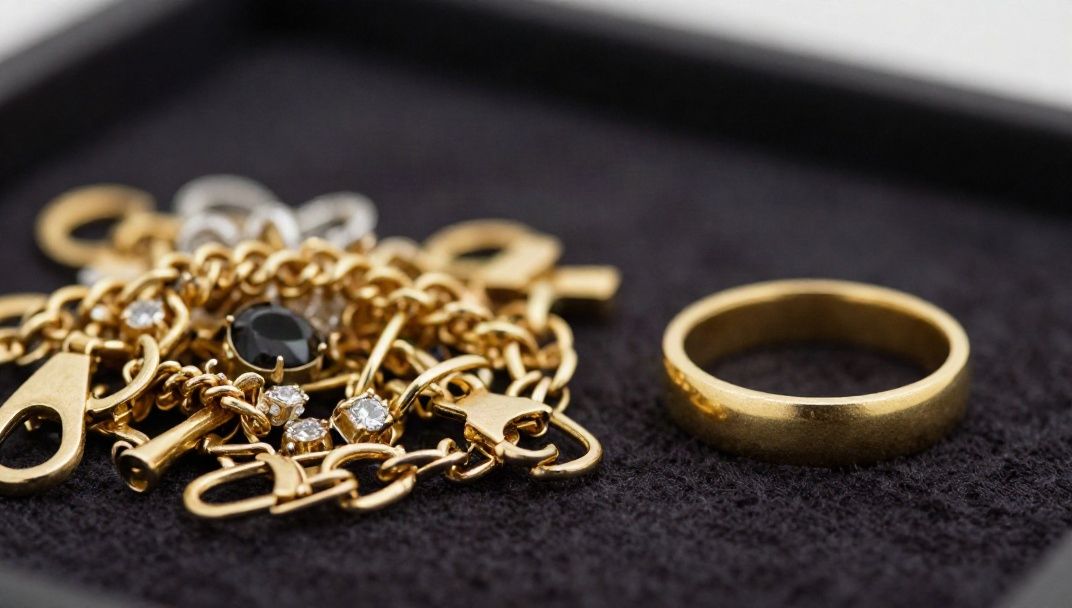
If you're thinking about selling an old gold ring, chain, bracelet, diamond ring, or inherited piece, you may wonder:
Is my jewelry worth more as jewelry, or is it worth more for the gold?
The answer depends on the piece.
Some jewelry is primarily valuable because of the precious metal it contains. Other pieces may be worth more intact because of their diamonds, gemstones, designer name, craftsmanship, condition, age, collectability, or resale demand. This distinction is important.
If valuable jewelry is treated as scrap without first examining the entire piece, additional value could potentially be overlooked.
At St. Louis Gold Buyers & Jewelry Center, we believe jewelry should first be evaluated for what it is, not simply placed on a scale and automatically treated as scrap.
If you're considering selling jewelry in St. Louis, here's how jewelry value and scrap-gold value differ.
What Is Scrap Gold Value?
Scrap gold value focuses primarily on the precious-metal content of an item.
The major factors include:
- Weight
- Gold purity
- Current gold market price
- Recoverable precious-metal content
- Refining and processing considerations
For example, a badly damaged 14K gold chain with no significant brand, gemstones, or resale demand may derive most of its value from the gold it contains.
The chain doesn't necessarily need to be wearable for that gold to have value.
What Is Jewelry Resale Value?
Jewelry resale value looks at the piece as a finished product rather than simply as raw precious metal.
Factors may include:
- Designer or maker
- Style
- Condition
- Age
- Craftsmanship
- Diamonds
- Gemstones
- Rarity
- Original components
- Current consumer demand
- Overall desirability
When these factors create meaningful secondary-market demand, the piece may deserve an evaluation beyond its underlying gold value.
Why the Difference Matters When Selling Jewelry
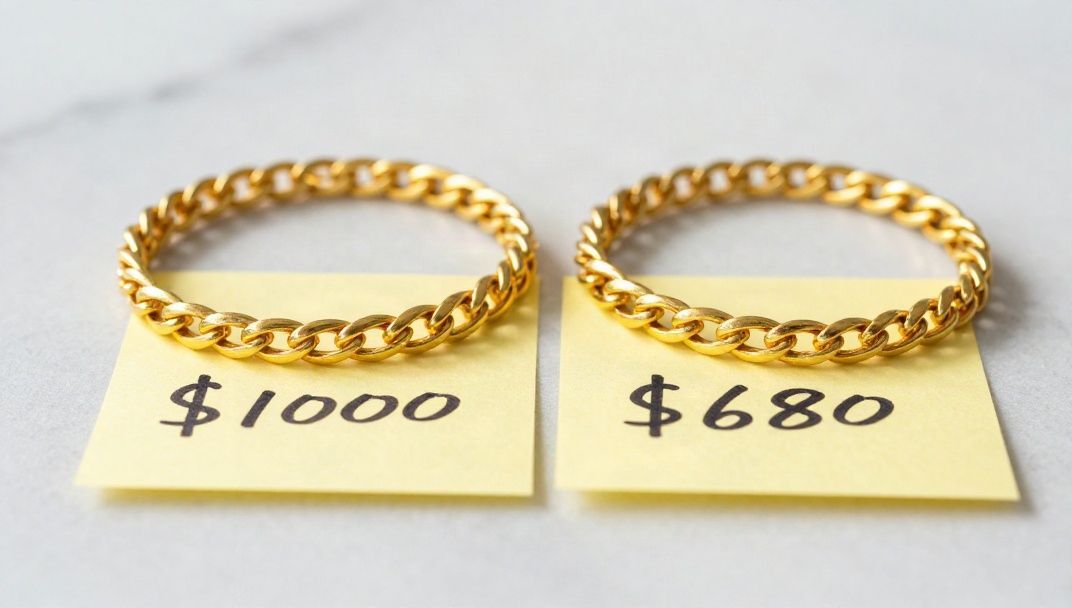
Imagine two bracelets.
Both weigh exactly the same.
Both are 18K gold.
From a strictly precious-metal perspective, their theoretical gold content could be similar.
But suppose one is an ordinary damaged bracelet with little resale demand, while the other is an authenticated piece from a desirable luxury jewelry maker.
Those two bracelets should not automatically be valued in exactly the same way.
One may primarily have scrap value.
The other may have additional resale value because someone wants to own that specific bracelet.
That's why weighing jewelry is important—but weight alone doesn't always tell the entire story.
When Is Jewelry Usually Worth Primarily as Scrap Gold?
Jewelry may be evaluated primarily for precious-metal content when it has limited realistic resale demand as a finished piece.
Examples can include:
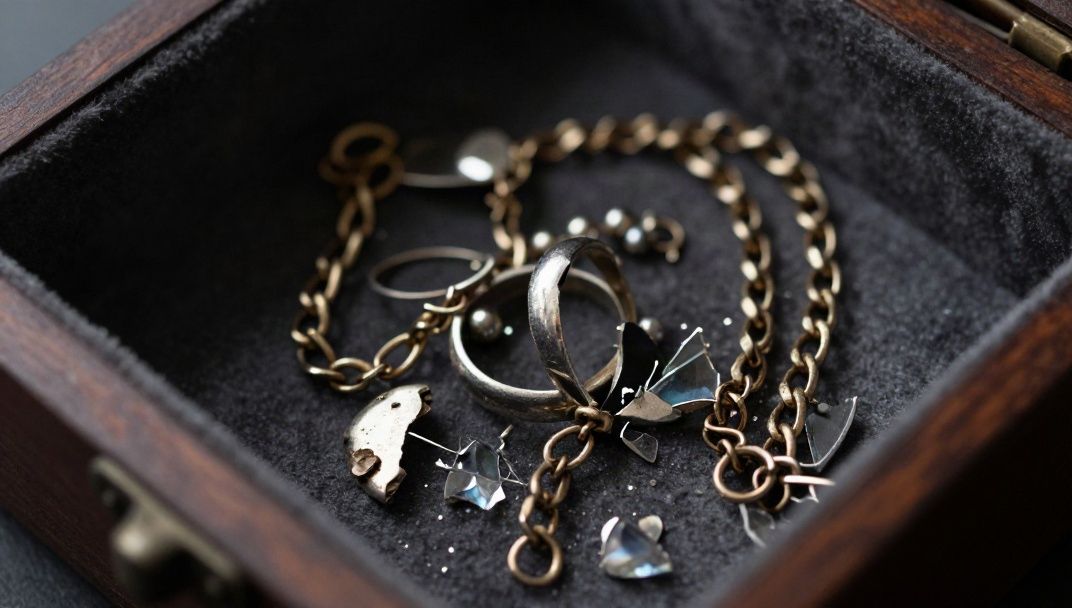
- Severely broken chains
- Damaged mountings
- Bent ordinary rings
- Unmatched earrings
- Worn-out bracelets
- Broken clasps
- Outdated mass-produced jewelry
- Jewelry with extensive damage
- Scrap pieces and fragments
- Certain empty gold settings
Even then, the item should be checked for diamonds, gemstones, designer markings, or other characteristics before being classified as scrap.
Does Broken Jewelry Still Have Gold Value?
Yes.
This is one of the biggest advantages of precious-metal jewelry.
A broken 14K chain still contains 14K gold alloy.
A bent 18K ring still contains gold.
A single gold earring can still have precious-metal value even though the matching earring is gone.
Physical damage may reduce the item's desirability as wearable jewelry, but it doesn't automatically eliminate its underlying precious-metal content.
When Could Jewelry Be Worth More Than Scrap Gold?
Several characteristics can potentially create value beyond the metal itself.
Designer or Luxury Brand
Certain recognized jewelry makers have strong secondary-market demand.
Buyers may be willing to pay for:
- Brand
- Design
- Craftsmanship
- Authenticity
- Rarity
- Condition
In these cases, melting the piece purely for gold could destroy the characteristic responsible for its additional value.
Diamonds
A quality diamond can have value independent of the gold or platinum setting.
Diamond evaluation may consider:
- Carat weight
- Cut
- Color
- Clarity
- Shape
- Condition
- Certification
- Natural or laboratory-grown origin
- Current market demand
A diamond ring should not automatically be placed on a scale and valued only for its metal.
Gemstones
Certain gemstones may also contribute value.
Depending on the stone, an evaluation may consider:
- Type
- Size
- Quality
- Condition
- Treatment
- Color
- Origin documentation
- Market demand
Not every gemstone has substantial resale value, but potentially important stones shouldn't simply be ignored.
Vintage or Estate Appeal
Some older jewelry has value because of its:
- Period
- Design
- Craftsmanship
- Rarity
- Maker
- Historical style
Age alone doesn't guarantee value, but certain vintage and estate pieces may deserve specialized evaluation.
Collectability
Some jewelry is sought after by collectors.
Collector demand can sometimes push value beyond what the precious-metal calculation alone would suggest.
Does a Designer Name Automatically Make Jewelry Valuable?
No.
A brand name doesn't automatically guarantee a large resale premium.
Factors still include:
- Authenticity
- Model
- Condition
- Current demand
- Age
- Completeness
- Original components
- Marketability
Some designer pieces maintain strong demand.
Others may trade much closer to their material value.
The key is identifying the piece correctly before deciding how it should be valued.
How Do You Know If Jewelry Is Designer?
Look for markings inside rings, on clasps, on the backs of pendants, or in other less visible areas.
You may find:
- Maker's marks
- Logos
- Brand names
- Serial numbers
- Model numbers
- Hallmarks
- Metal fineness marks
Original boxes, receipts, certificates, and paperwork can also help.
However, markings alone do not establish authenticity.
Professional examination may still be necessary.
Can a Diamond Ring Be Worth More Than Its Gold?
Absolutely.
The metal may represent only one component of a diamond ring's value.
Suppose a ring contains a significant natural diamond.
The setting may have a certain precious-metal value, while the diamond has a separate secondary-market value.
Evaluating only the gold could overlook the stone.
This is why diamond jewelry should be examined as a complete item before being treated as scrap.
What If My Ring Is Missing the Center Diamond?
The ring may still have value.
An empty mounting could contain:
- 10K gold
- 14K gold
- 18K gold
- Platinum
- Smaller diamonds
- Other gemstones
- Designer value
The missing center stone may reduce resale potential, but the remaining materials don't automatically become worthless.
Can Old Jewelry Be Worth More Than Scrap?
Sometimes.
Old jewelry shouldn't automatically be melted simply because the style is no longer fashionable.
An older piece might be:
- Vintage
- Antique
- Designer-made
- Handcrafted
- Collectible
- Set with important gemstones
On the other hand, some older jewelry has little demand as a complete piece and may be worth primarily for its precious-metal content.
The only way to know is to examine the item.
Does an Insurance Appraisal Mean Jewelry Is Worth More Than Scrap?
Not necessarily.
An insurance appraisal usually serves a different purpose from determining immediate resale or cash value.
Insurance replacement values can reflect what it might cost to replace an item through an appropriate retail market.
That amount can be substantially different from what someone would pay for the used piece today.
So while an appraisal can provide useful information about:
- Metal
- Diamonds
- Gemstones
- Measurements
- Quality
- Manufacturer
the appraisal amount should not automatically be interpreted as cash resale value.
Is Retail Price the Same as Resale Value?
No.
Retail jewelry pricing can include costs associated with:
- Manufacturing
- Wholesale distribution
- Retail overhead
- Marketing
- Labor
- Warranty and service
- Store operations
- Profit margins
Once jewelry enters the secondary market, it competes with other pre-owned jewelry.
Therefore, the original retail price doesn't necessarily tell you what the piece can be sold for today.
What Is Melt Value?
Melt value generally refers to the theoretical value associated with the precious-metal content of an item.
For gold jewelry, this begins with:
Weight + Purity + Current Fine-Gold Market Price
For example:
10K gold ≈ 41.7% gold
14K gold ≈ 58.3% gold
18K gold = 75% gold
22K gold ≈ 91.7% gold
24K gold ≈ essentially pure gold
A buyer must also consider processing, refining, non-gold components, and other business factors when determining an actual cash offer.
Example: Ordinary 14K Gold Chain
Imagine an ordinary 14K chain that is badly broken and has no meaningful brand or collector demand.
Its primary value may come from:
Gold purity + weight + current gold market conditions.
In this situation, repairing the chain solely to sell it may not necessarily increase the amount enough to justify the repair cost.
Having it evaluated as-is can make more sense.
Example: Designer Gold Bracelet
Now imagine an authenticated designer bracelet with strong secondary-market demand.
The bracelet contains gold, so it has an underlying precious-metal value.
But if buyers are willing to pay more for the intact designer bracelet than for its gold content alone, the resale market becomes important.
Treating it only as scrap could overlook that additional value.
Example: Diamond Engagement Ring
An engagement ring can contain multiple value components.
There may be:
Gold or platinum value
plus
Diamond value
plus, in certain cases,
Designer or resale value.
A complete evaluation should consider each applicable component.
Example: Single Gold Earring
A single ordinary gold earring without significant stones or designer demand may primarily have precious-metal value.
That's perfectly fine.
The missing matching earring doesn't eliminate the value of the gold in the remaining piece.
This is why single earrings are worth bringing in rather than throwing away.
Should You Repair Jewelry Before Selling It?
Not automatically.
If the item is primarily going to be valued for precious-metal content, paying for a repair may not substantially improve the offer.
However, if a reasonable repair could restore a desirable piece with strong resale demand, the situation may be different.
Before spending money, determine:
- What is the jewelry worth now?
- What will the repair cost?
- What might it realistically be worth after repair?
Then make the decision.
Should You Remove Diamonds Before Selling Gold?
Usually, bring the jewelry in intact.
Removing diamonds or gemstones yourself can damage:
- Stones
- Prongs
- Settings
- Designer pieces
It can also make it more difficult to understand the original item.
Have the complete piece evaluated first.
Should You Melt Old Jewelry Yourself?
Generally, there is little reason for a typical consumer to alter or melt jewelry before obtaining a professional evaluation.
Doing so can permanently destroy:
- Hallmarks
- Designer signatures
- Antique characteristics
- Collectible value
- Original construction
Once those characteristics are destroyed, they cannot simply be put back.
Evaluate first. Alter later.
What About Gold Coins?
Gold coins are another excellent example of why metal value isn't always the whole story.
A gold coin can have:
- Gold bullion value
- Numismatic value
- Collector demand
- Scarcity premiums
Factors such as date, mint mark, condition, authenticity, and rarity may matter.Don't automatically treat an old gold coin as scrap metal.
Have it properly identified first.
What About Luxury Watches?
Luxury watches should also not be evaluated simply by weighing their gold components.
A watch can have value based on:
- Brand
- Model
- Reference
- Condition
- Movement
- Originality
- Age
- Box and papers
- Current collector demand
A desirable watch may be worth considerably more as a complete timepiece than for its metal content.
What About Sterling Silver?
The same general principle can apply to silver.
Some ordinary damaged sterling items may primarily have silver value.
Other items may have additional value because of:
- Maker
- Pattern
- Age
- Craftsmanship
- Collectability
- Completeness
This can be particularly relevant with estate sterling silver and flatware.
How We Determine Whether Jewelry Is Worth More Than Scrap
At St. Louis Gold Buyers & Jewelry Center, we don't want to look at a piece only as a number on a scale.
Our evaluation can consider:
Precious-Metal Type
Is it gold, silver, platinum, palladium, or another material?
Purity
For gold, is it 10K, 14K, 18K, or another karat?
Weight
How much applicable precious-metal material is present?
Current Market Conditions
What are precious metals trading for?
Diamonds and Gemstones
Are there stones that may contribute value?
Designer or Maker
Does the piece have identifiable branding or craftsmanship that matters?
Condition
Can the piece reasonably be resold or restored?
Current Resale Demand
Is there a market for the jewelry as a complete piece?
Only after looking at the relevant factors can you better understand where the item's value comes from.
Why This Matters When Comparing Jewelry Buyers
Suppose one buyer sees only:
14K + weight = offer
while another recognizes:
14K + valuable diamond + desirable designer = different evaluation.
The difference isn't necessarily the gold price.
It's the way the entire piece is being evaluated.
This is why expertise matters when selling jewelry, particularly with estate, diamond, designer, and luxury pieces.
Where Can I Sell Jewelry in St. Louis?
If you're searching for “sell jewelry St. Louis,” “jewelry buyers St. Louis,” “gold buyers St. Louis,” “estate jewelry buyers near me,” “diamond buyers St. Louis,” or “gold buyers near me,” visit St. Louis Gold Buyers & Jewelry Center.
We evaluate and buy items including:
- Gold jewelry
- Broken gold
- Scrap gold
- Diamond jewelry
- Estate jewelry
- Designer jewelry
- Silver
- Sterling silver
- Platinum
- Palladium
- Gold-filled material
- Gold and silver coins
- Luxury watches
- Other valuables
Our goal is to determine what you actually have before deciding how it should be valued. Applicable precious metals can be tested and weighed, and additional characteristics such as diamonds, gemstones, designer names, and resale potential can also be considered. If you decide to sell, same-day payment is available.
Before You Sell Jewelry, Don't Assume It's Just Scrap
This is the most important takeaway:
Gold weight matters—but sometimes your jewelry is more than its gold. A broken chain may primarily have precious-metal value.
A diamond engagement ring may contain value in both the stone and setting. A designer bracelet may have a secondary market.
An old coin may have collector value. A luxury watch may be worth far more intact than its metal content. That's why the first step shouldn't automatically be melting, repairing, removing stones, or accepting a scrap-only evaluation. The first step should be determining exactly what you have. At St. Louis Gold Buyers & Jewelry Center, we evaluate the complete piece so you can better understand where its value comes from before deciding whether to sell.